Integrated Systems
Integrated Production Systems
Connect equipment, material flow, identification, inspection, and production controls into a coordinated workflow built around how your operation actually runs.
ATP Equipment Solutions helps businesses evaluate and bring together technologies across print, mail, coding, labeling, packaging, and material handling, whether the project involves a new production line or existing equipment.
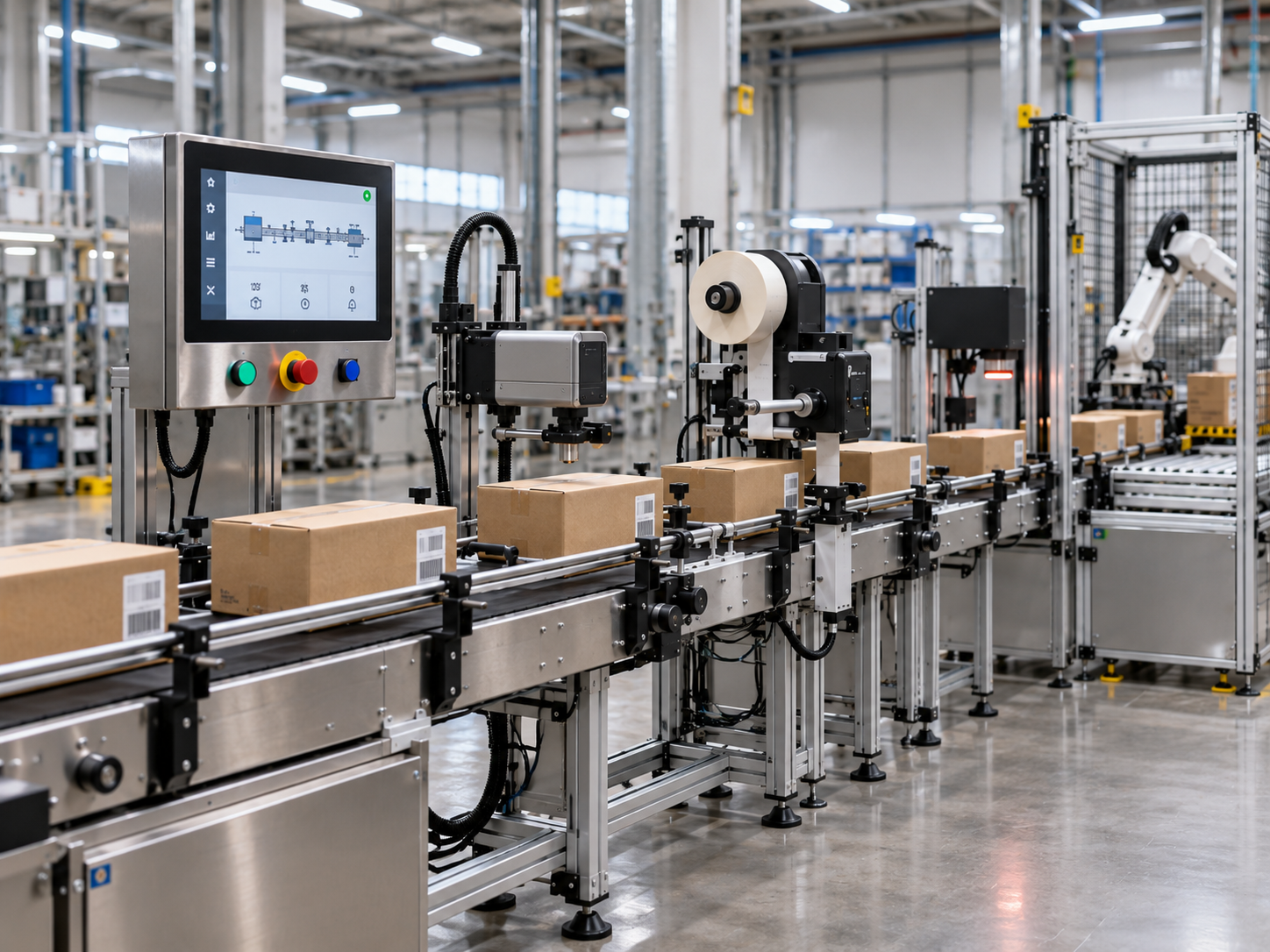
What Is an Integrated Production System?
An integrated production system connects multiple machines and process steps so products, production data, and control signals move through a coordinated workflow. A project may connect new equipment with an existing line, combine technologies from several equipment categories, or replace manual handoffs with a more controlled process.
Integration should solve a defined production challenge. The right system depends on the product, required throughput, quality and inspection requirements, available space, existing equipment, operator involvement, and what must happen before and after each production stage.
When Does Production Line Integration Make Sense?
Not every application requires a complete automated line. Integration becomes valuable when the handoffs between individual processes begin limiting production, quality, or visibility.
Manual Handoffs Interrupt Production
Operators repeatedly move, position, inspect, scan, or transfer products between machines that currently operate as separate processes.
Equipment Speeds Create Bottlenecks
Upstream and downstream machines operate at different rates, causing product backups, idle equipment, unnecessary stops, or inconsistent flow.
Identification and Inspection Must Follow the Product
Coding, labeling, barcode reading, inspection, weighing, dimensioning, or documentation must remain connected to the correct product, case, or pallet.
New Equipment Must Fit an Existing Workflow
A new machine needs to work with existing conveyors, controls, product handling, floor space, data sources, operators, and downstream processes.
The goal is not to automate every step. The goal is to connect the right steps in a way that supports the actual operation.
One Workflow, Multiple Technologies
Integrated systems may combine equipment and capabilities from several production areas. The exact configuration depends on the application and project scope.
- 0101
Production Equipment
Connect equipment used for print, mail, digital printing, coding, labeling, packaging, and other production processes.
- 0202
Material Flow
Use conveyors, accumulation, guides, transfers, sortation, and pallet handling to move products consistently between production stages.
- 0303
Identification and Quality
Coordinate coding, labeling, barcode reading, cameras, inspection, weighing, dimensioning, and verification when the application requires them.
- 0404
Controls and Coordination
Use supported sensors, triggers, line signals, data handoffs, and equipment sequencing to coordinate how each production stage responds.
Specific capabilities depend on the selected equipment, manufacturer interfaces, existing systems, and approved project scope.
How ATP Approaches an Integrated System
A successful project begins with understanding the complete production process rather than selecting individual machines in isolation.
- 01
Understand the Application
Review the product, package, materials, production volume, required throughput, operator involvement, quality requirements, available space, and current challenges.
- 02
Map the Workflow
Document how products enter the process, move between stages, interact with equipment, and leave the completed system.
- 03
Select and Coordinate Technologies
Identify the appropriate equipment categories, evaluate compatibility, and determine how material flow, controls, data, inspection, and production handoffs should work together.
- 04
Support the Path Into Production
Coordinate the approved project scope and help connect the completed system with appropriate Service & Support resources.
Project responsibilities and capabilities vary by application, equipment manufacturer, facility requirements, and approved scope.
Explore the Technologies That Can Work Together
Start with the production area you need to improve, then explore how multiple technologies can be connected through an integrated system.
Addressing & Mail Production
Connect feeding, folding, inserting, addressing, verification, and mailpiece handling.
Explore Addressing & Mail ProductionDigital Printing & Finishing
Connect production printing with media handling, variable data, finishing, inspection, and downstream processes.
Explore Digital Printing & FinishingCoding & Marking
Connect direct product coding with sensors, line controls, inspection, data sources, and package handling.
Explore Coding & MarkingLabeling & Print-and-Apply
Connect label application with variable data, conveyors, scanning, inspection, and package movement.
Explore Labeling & Print-and-ApplyPackaging Automation
Connect forming, filling, packing, sealing, wrapping, strapping, and palletizing processes.
Explore Packaging AutomationMaterial Handling & End-of-Line Automation
Connect conveyors, accumulation, routing, inspection, documentation, and pallet handling.
Explore Material Handling & End-of-Line AutomationPalletVision Load Documentation
Connect wrap-point pallet imaging, dimensioning, and time-stamped load records with the end-of-line workflow.
Explore PalletVision
Integrated Systems FAQs
What is an integrated production system?
An integrated production system connects multiple machines or process stages so products, information, and control signals move through a coordinated workflow. It may involve new equipment, existing machinery, or a combination of both.
Can ATP integrate new equipment with an existing production line?
In many applications, new equipment can be connected with an existing production process. Mechanical layout, product flow, controls, line speed, safety, data requirements, available space, and equipment compatibility must be evaluated first.
Can equipment from different manufacturers work together?
Equipment from multiple manufacturers can often be coordinated, but the mechanical, electrical, controls, communication, and production interfaces must be validated. Compatibility depends on the specific machines and project requirements.
What information does ATP need to evaluate an integrated system?
Helpful information includes product samples, production volumes, required speeds, current equipment, line layouts, available space, operator steps, quality requirements, data needs, photographs, and video of the existing process.
Bring the Production Workflow Together
Show ATP Equipment Solutions how products enter, move through, and leave your current process. Our team can help identify where equipment, material flow, identification, inspection, and controls should connect.