Addressing & Mail Production

Addressing & Mail Production Solutions

Improve the speed, accuracy, and consistency of high-volume mail preparation with production mail solutions for feeding, folding, inserting, addressing, tabbing, stamp affixing, sorting, and verification.

ATP Equipment Solutions helps commercial printers, mail houses, in-plant operations, and other production environments evaluate mail automation around production volume, mailpiece formats, data requirements, available space, and quality-control needs.

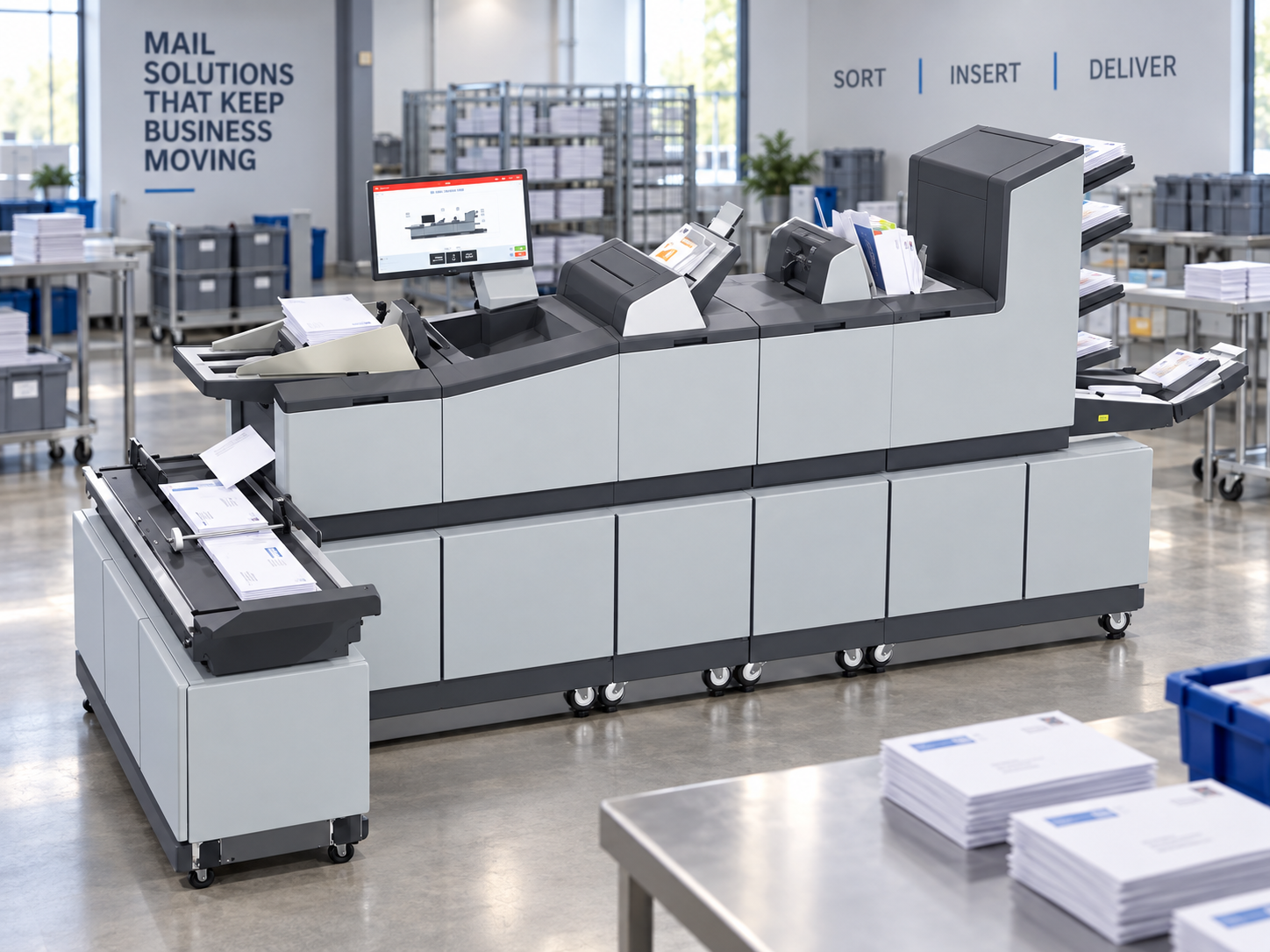
Production mail inserter system preparing outbound mail in a clean mail production facility

What Are Production Mail Solutions?

Production mail solutions combine equipment and workflow controls used to prepare large volumes of mail accurately and efficiently. Depending on the application, a system may feed, fold, collate, insert, address, seal, tab, affix stamps, verify, sort, and collect mailpieces in one coordinated process.

Not every operation needs every stage. The appropriate workflow depends on the mailpiece, number and type of inserts, production volume, required speed, data variability, integrity requirements, job mix, and existing equipment.

Build the Mail Workflow Around the Application

A mail-production system may combine several individual processes, but the correct configuration should be based on how each job enters, moves through, and exits production.

  1. 01

    Feed & Transport

    Reliably introduce envelopes, sheets, cards, booklets, and other materials into the production process.

  2. 02

    Fold & Collate

    Fold documents and organize multiple sheets or inserts into the correct sequence for each mailpiece.

  3. 03

    Insert & Enclose

    Place documents, reply envelopes, cards, and other components into the appropriate carrier envelope.

  4. 04

    Address & Personalize

    Print addresses, barcodes, messages, graphics, and other variable information directly onto envelopes or mailpieces.

  5. 05

    Tab, Seal & Affix

    Close or prepare mailpieces using tabbing, sealing, and stamp-affixing processes matched to the application.

  6. 06

    Verify, Sort & Collect

    Confirm mailpiece accuracy, route completed pieces, and organize output for the next production or mailing step.

Not every application requires every stage. ATP helps evaluate the combination that fits the mailpiece, production volume, and operating requirements.

Where Mail Production Automation Creates Value

Manual preparation and disconnected production steps can limit throughput, increase handling, and make complex mailing jobs harder to manage. A properly configured workflow can help improve consistency across the entire process.

01

Reduce Manual Mail Preparation

Automate repetitive feeding, folding, inserting, addressing, and finishing steps that would otherwise require ongoing operator handling.

02

Increase Production Throughput

Move mailpieces through repeatable processes at speeds matched to current volume and future production requirements.

03

Improve Mailpiece Integrity

Use available barcode, camera, or tracking capabilities to help confirm that the correct documents and inserts are assembled for each recipient, depending on the selected equipment and configuration.

04

Handle More Job Types

Support changing mailpiece sizes, insert combinations, envelope formats, personalized information, and production requirements.

05

Simplify Job Changeovers

Select equipment and controls designed to make recurring setups and transitions between mailing jobs easier to manage.

06

Connect Separate Production Steps

Bring feeding, inserting, addressing, verification, and output handling into a more coordinated production workflow.

Addressing and Mail Production Capabilities

ATP Equipment Solutions supports multiple stages of the mail-production workflow. The right combination depends on the materials, finished mailpiece, production speed, data requirements, and level of automation.

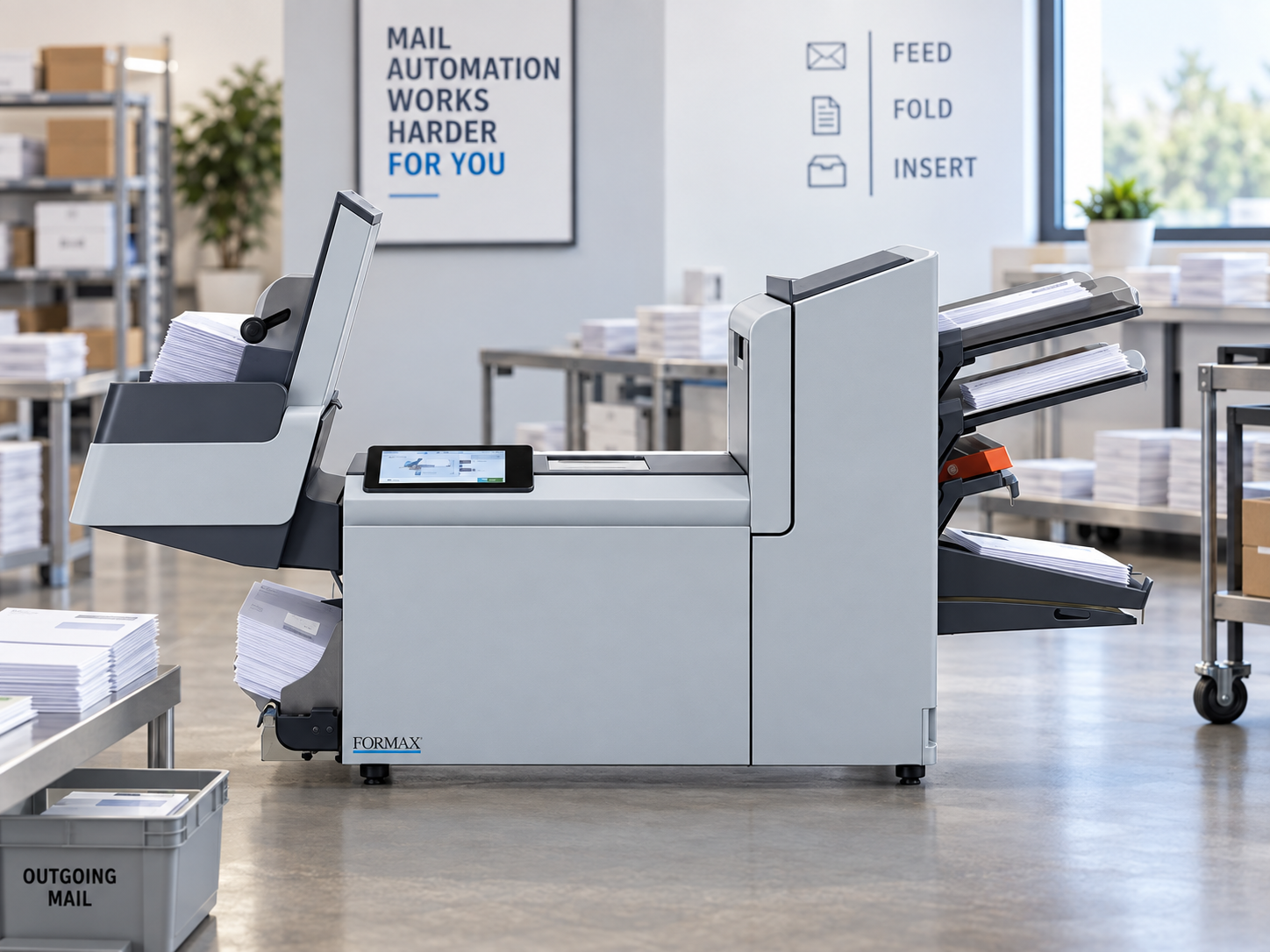
Formax automated folding and inserting system in a mail production facility

Feeding, Folding & Inserting

Automated paper feeders, paper folders, folder inserter systems, and production mail inserter machines help move documents and inserts through the assembly process with greater consistency. Available configurations may range from straightforward folding and inserting applications to modular envelope inserters designed for multiple feeders, complex document sets, and high-volume mail production.

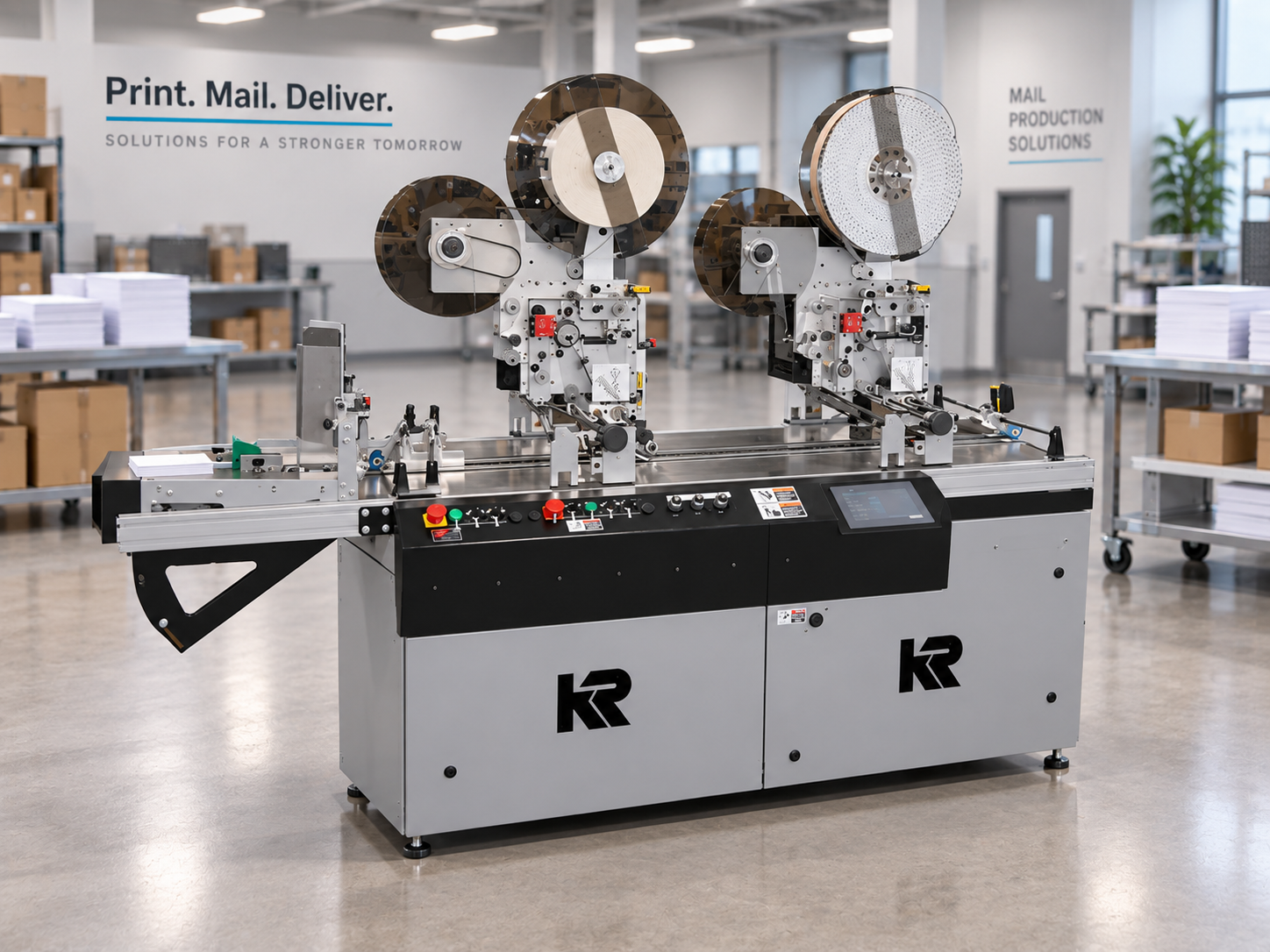
KR555 TabMaster tabbing and stamp affixing system in a production mail facility

Addressing, Tabbing & Stamp Affixing

Inkjet addressing systems and digital address printers can apply variable addressing, barcodes, graphics, and other information directly to envelopes, postcards, self-mailers, and additional mailpiece formats. Mail tabbers and stamp affixing equipment can then prepare appropriate pieces of personalized mail for the next stage of the mailing process.

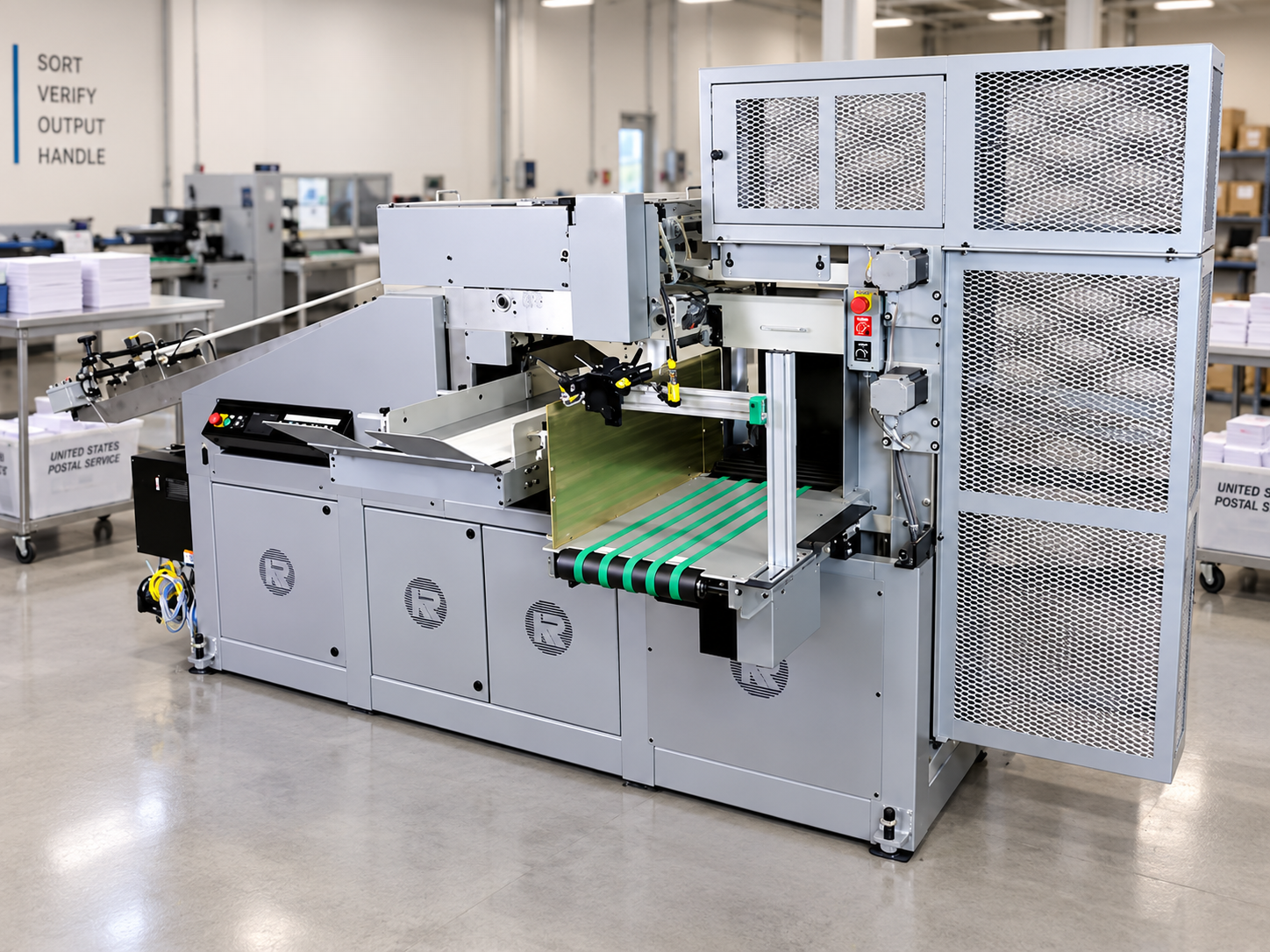
KR703 ramp stacker handling completed mailpieces for sorting, verification, and output organization

Sorting, Verification & Output Handling

Mail sorting systems, mail verification systems, output conveyors, and stackers help organize completed pieces and support quality control at the end of the production workflow. Depending on the selected system, barcode verification, camera verification, and job-tracking capabilities may help confirm document assembly and mailpiece integrity.

Explore Print & Mail Equipment

Addressing and mail production solutions are built from equipment selected around the workflow. Browse ATP’s Print & Mail Equipment category to explore the machine types that support each stage of production.

  • Feeders
  • Folders
  • Inserters
  • Addressing Systems
  • Tabbers & Stamp Affixers
  • Sorters & Verification Systems
Browse All Print & Mail Equipment

How to Select a Mail Production System

The right automated mailing system is determined by more than the maximum operating speed. Equipment should be evaluated around the actual jobs being produced, how often those jobs change, and how the system must fit into the surrounding workflow.

Current and Projected Mail Volume
Evaluate average production, peak periods, job frequency, and expected growth rather than relying only on a single daily volume estimate.
Mailpiece Formats
Document envelope sizes, postcards, self-mailers, flats, booklets, sheet counts, material thicknesses, and other formats the system must handle.
Documents and Inserts
Determine how many sheets, cards, reply envelopes, brochures, or other components belong in each finished mailpiece.
Addressing and Personalization
Identify where addresses, barcodes, messages, graphics, or other variable information need to be printed.
Integrity and Verification
Define whether the application requires barcode reading, camera verification, document matching, job tracking, or other quality-control capabilities.
Job Mix and Changeovers
Consider how often formats and configurations change, how many recurring jobs are produced, and how quickly operators need to move between them.
Available Space and Staffing
Account for equipment footprint, operator access, material staging, output collection, and the experience level of the production team.
Existing Equipment and Workflow
Determine whether the new system must connect with an existing printer, feeder, conveyor, software process, or downstream production step.
Discuss Your Mailing Application

Applications for Addressing & Mail Production

Production mail automation can support a wide range of recurring, personalized, transactional, and promotional mailing applications.

Formax automated folding and inserting system in a mail production facility

Direct Mail Campaigns

Postcards, letters, self-mailers, inserts, and other promotional communications prepared at production scale.

Transactional Mail

Statements, invoices, notices, confirmations, and other recipient-specific documents.

Personalized and Variable Mail

Mailpieces containing changing addresses, messages, barcodes, graphics, or document combinations.

Catalogs, Booklets and Flats

Larger or multi-page materials requiring feeding, inserting, enclosing, or organized output handling.

In-Plant Mail Production

Centralized production environments supporting internal departments, customers, members, students, donors, or other audiences.

Commercial Print and Mail Operations

High-volume environments producing multiple jobs, formats, and customer applications.

Related Production Solutions

Digital Printing & Finishing

Explore the production printing and finishing technologies used to create variable, personalized, short-run, label, and corrugated output.

Explore Digital Printing & Finishing

Integrated Systems

Connect mail equipment, printing, verification, material handling, and production controls into a coordinated workflow.

Explore Integrated Systems

Service & Support

Find technical support, maintenance, repairs, upgrades, and help improving the performance of existing equipment.

Explore Service & Support

Addressing and Mail Production FAQs

What is a production mail system?

A production mail system is a combination of equipment and workflow controls used to prepare mailpieces at scale. Depending on the application, it may feed, fold, collate, insert, address, seal, tab, verify, sort, and collect completed mail.

What is the difference between a folder inserter and a production mail inserter?

A folder inserter generally automates folding documents and placing them into envelopes. Production mail inserters are typically designed for higher volumes, more feeders, more complex document sets, advanced integrity controls, or additional inline processes, although exact capabilities vary by system.

Can address printing be added to an existing mail-production line?

In many applications, an inkjet addressing system or digital address printer can be added to an existing transport or production line. Compatibility depends on mailpiece size, material, required print area, line speed, available space, and the equipment already in place.

What types of mailpieces can automated mailing systems process?

Depending on the selected equipment, automated systems may process envelopes, postcards, self-mailers, sheets, cards, booklets, flats, and other printed materials. The size, thickness, construction, and number of inserts must be evaluated before selecting a configuration.

How can verification systems improve mailpiece integrity?

Verification systems may use barcodes, optical marks, cameras, or job-tracking data to help confirm that documents and inserts are assembled correctly. Available capabilities depend on the equipment, workflow, software, and level of control required.

What mail volume justifies production mail automation?

Volume is important, but it is not the only factor. Labor requirements, mailpiece complexity, job frequency, turnaround time, error risk, and the number of manual production steps can also determine whether automation is appropriate.

Can ATP help connect new mail equipment to an existing workflow?

ATP Equipment Solutions can evaluate how new feeding, inserting, addressing, verification, or output equipment may fit with the customer's existing process. More complex multi-technology applications can also be evaluated through ATP's Integrated Systems capabilities.

What information is needed to recommend a mail-production solution?

Helpful information includes production volume, mailpiece dimensions, envelope sizes, sheet and insert counts, required speed, addressing needs, verification requirements, available floor space, current equipment, and examples of the jobs being produced.

Build a More Efficient Mail Production Workflow

Tell ATP Equipment Solutions about your mailpieces, production volume, job mix, current equipment, and workflow challenges. Our team can help identify the equipment and production approach that best fit the application.