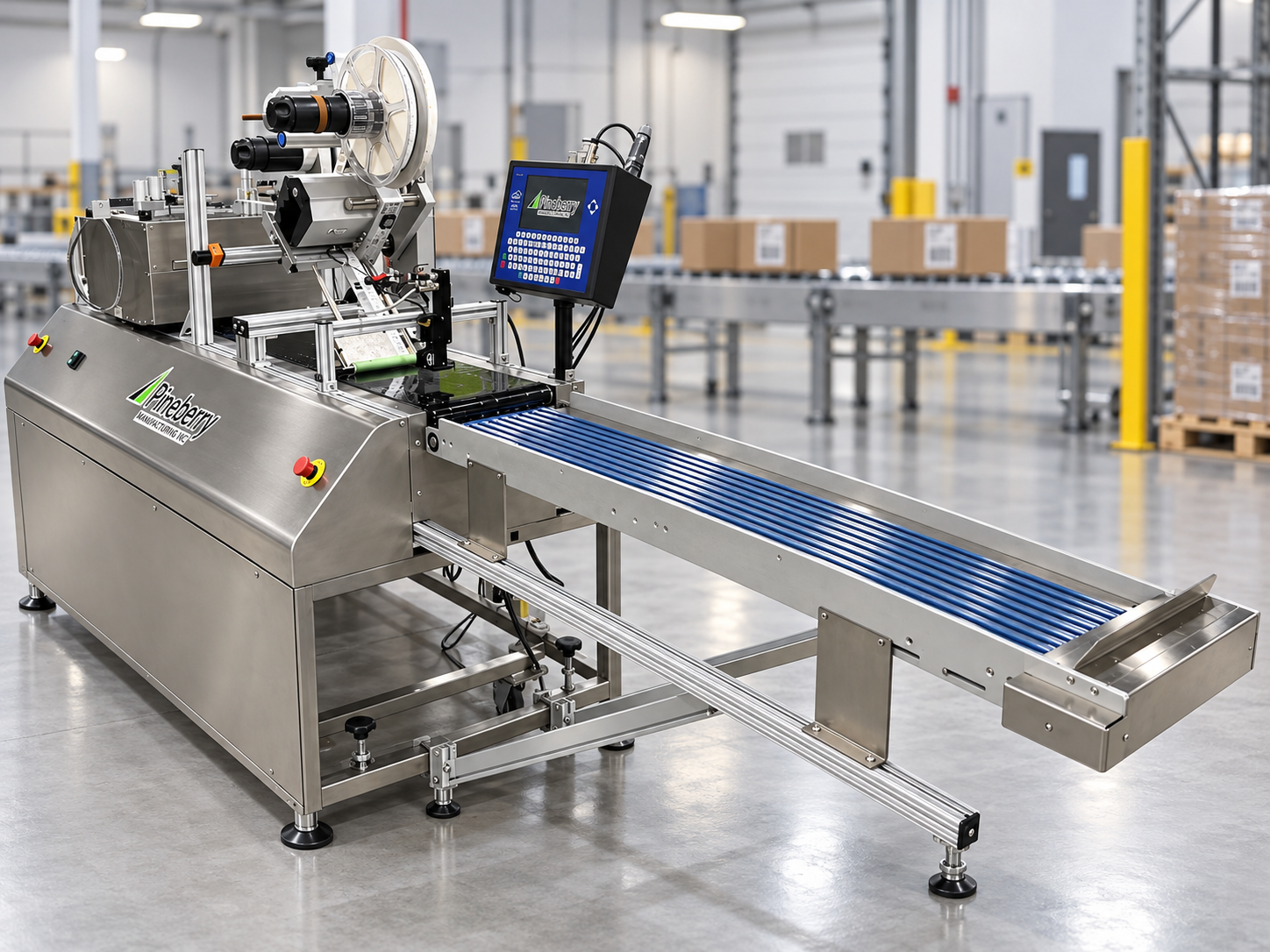
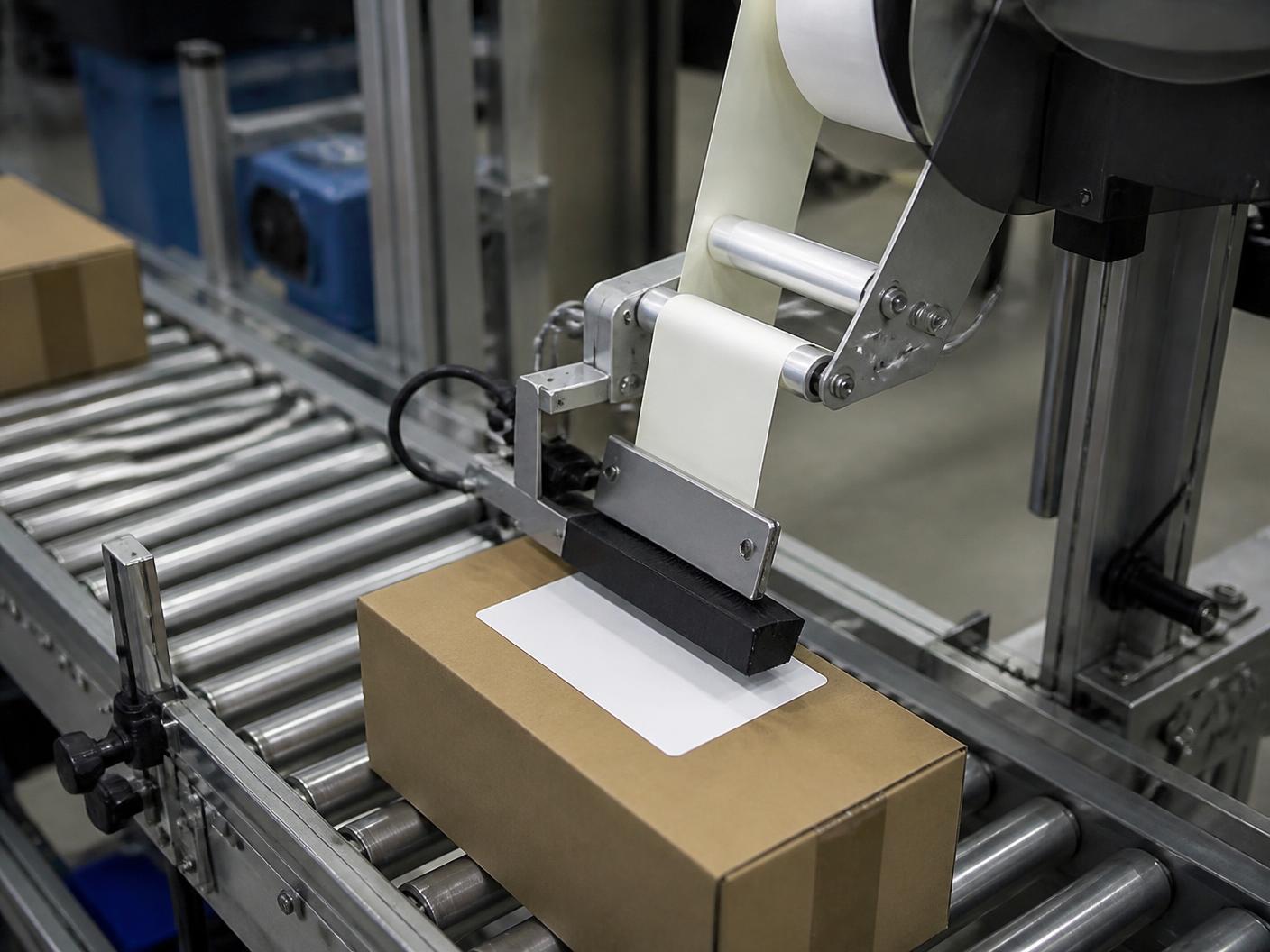
Improve label placement, reduce manual handling, and support changing product or shipping data with automated labeling solutions built around your product, package, line speed, and workflow.
ATP Equipment Solutions helps businesses evaluate automatic label applicators, print-and-apply systems, case labeling, and pallet labeling for standalone or integrated production environments.
The right system depends on whether the label is already printed, whether the content changes during production, and where the label must be applied.
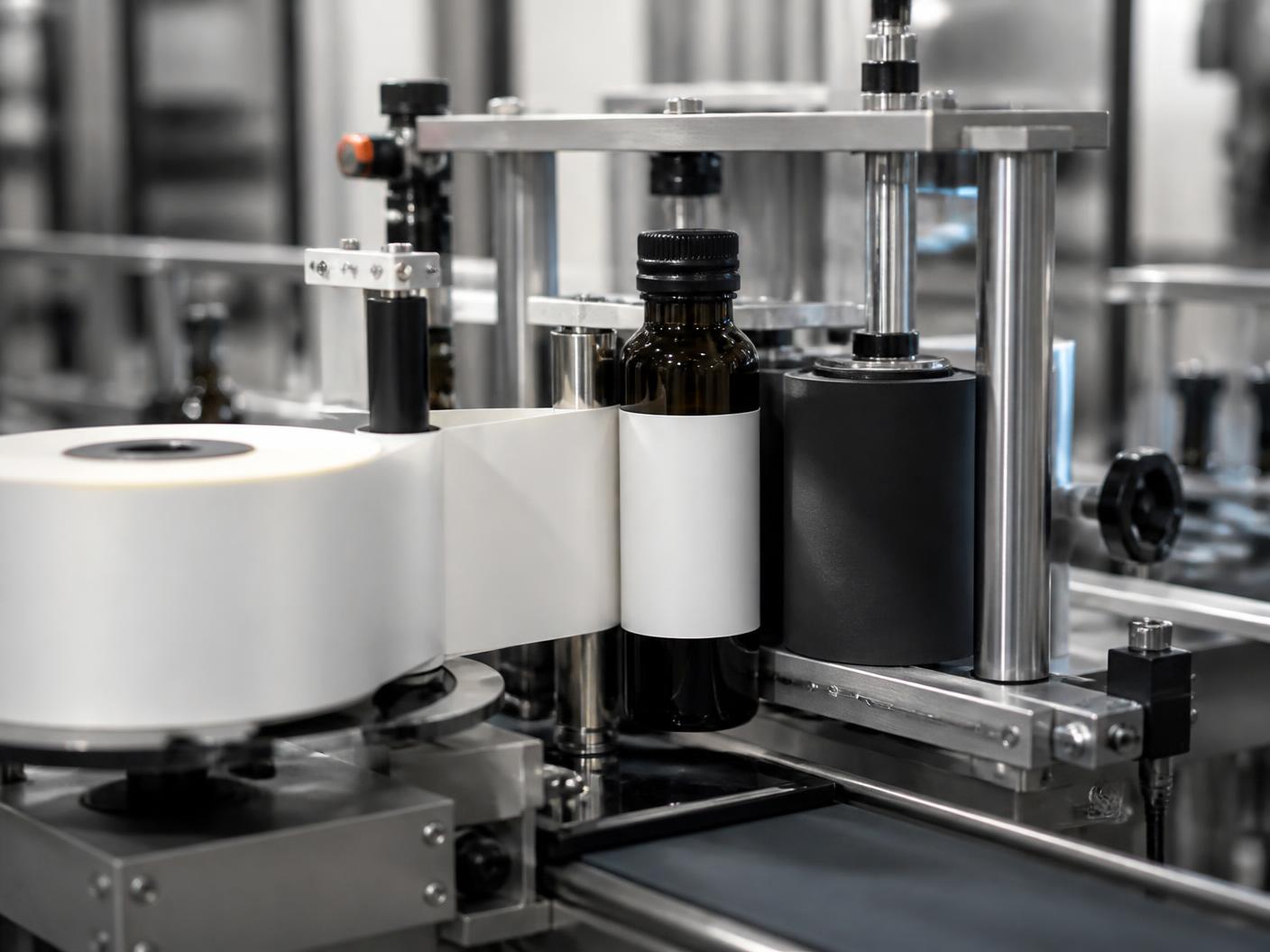
Preprinted Label Application
Automatically apply preprinted branding, product, informational, or barcode labels to containers, cartons, trays, and other packages.
Best suited to applications where the label content is created before the roll is loaded onto the machine.
Print-and-Apply Labeling
Print variable information such as barcodes, shipping data, product identifiers, serial numbers, or order information, then apply the label as part of the same process.
Best suited to applications where label content changes by product, case, order, shipment, or pallet.
Case and Pallet Labeling
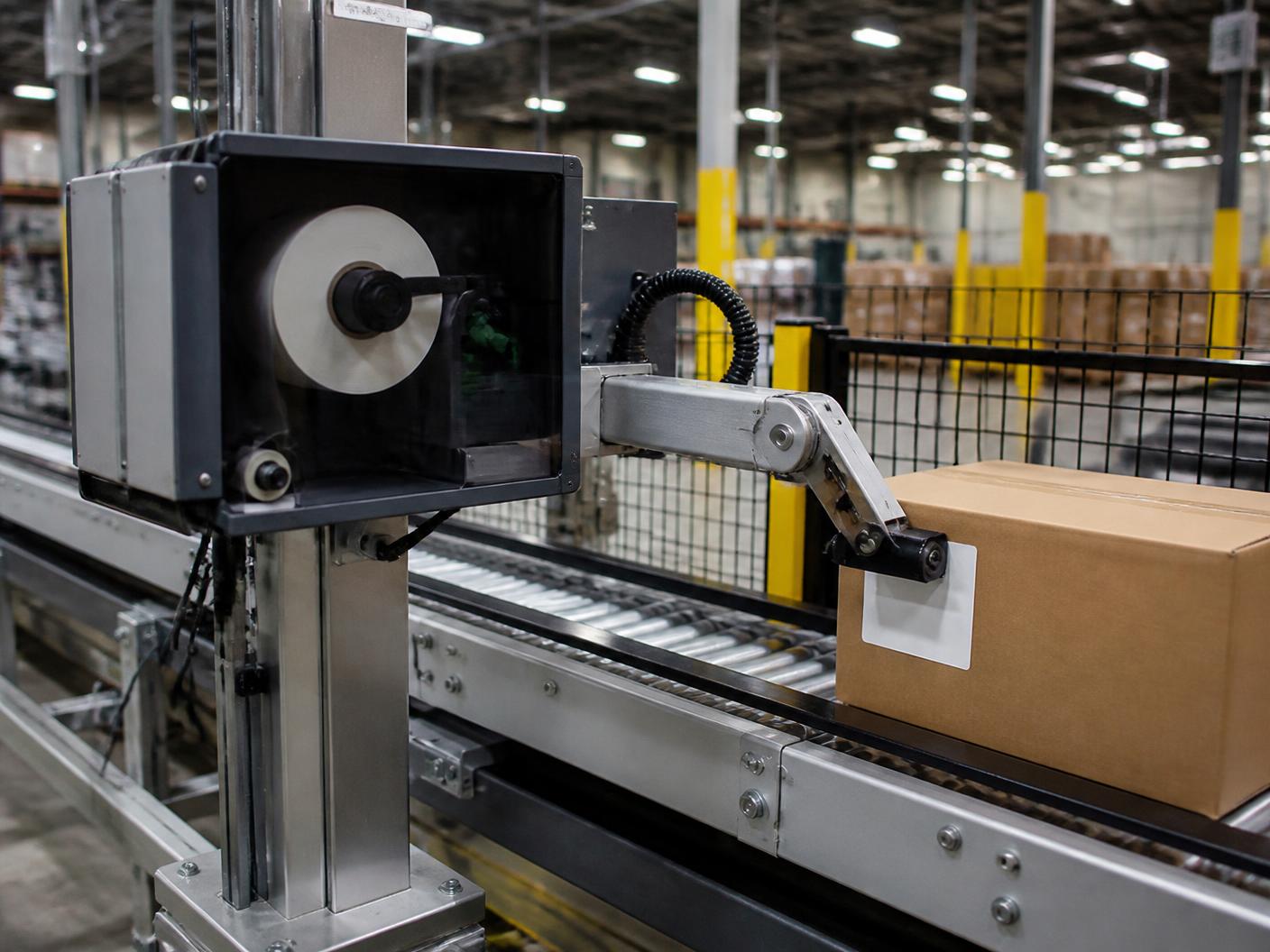
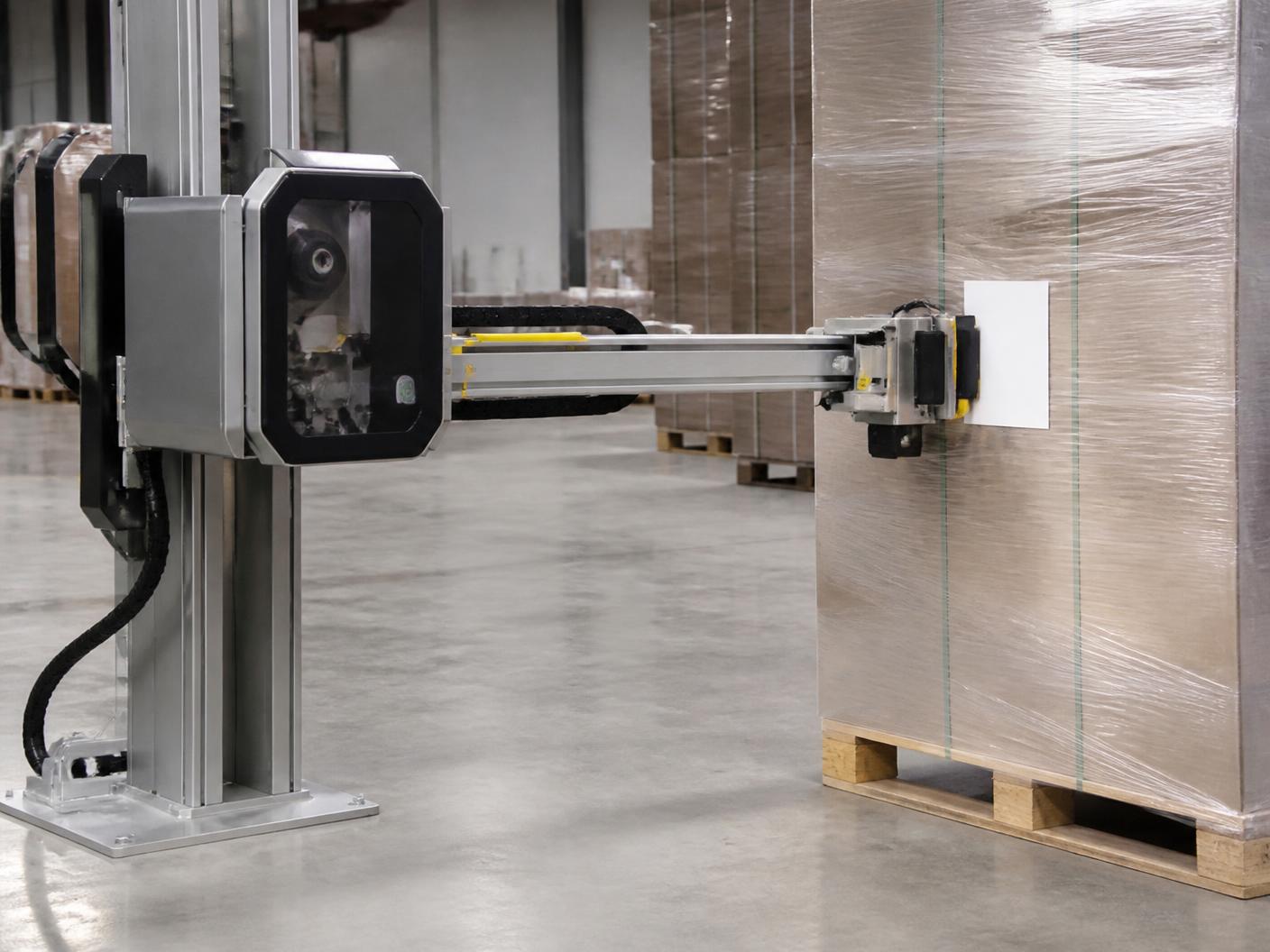
Apply identification, routing, shipping, and logistics labels to corrugated cases and pallet loads as they move through end-of-line operations.
These systems may connect with conveyors, scanners, warehouse data, and other production equipment when required.
Label Products, Packages, Cases, and Pallets
Labeling requirements change as products move through packaging, production, storage, and distribution. ATP helps match the equipment to the item being labeled and the role the label plays in the workflow.
Product and Container Labeling
Apply branding, product information, instructions, or barcodes to bottles, jars, cans, tubs, cartons, and other supported products.
Package and Carton Labeling
Apply labels to trays, boxes, bags, shrink-wrapped packages, and other secondary packaging formats.
Case and Shipping Labeling
Print and apply order, routing, product, or barcode labels to corrugated shipping cases.
Pallet and Logistics Labeling
Apply identification, shipping, inventory, or routing labels to completed pallet loads.
What Determines the Right Labeling System?
The appropriate labeling system is based on the complete application, not simply the advertised machine speed.
01
Product and Package
Evaluate the dimensions, shape, surface, stability, and how the item moves through production.
02
Label and Placement
Confirm the label size, material, adhesive, orientation, and whether it must be applied to the top, side, bottom, wraparound surface, corner, case, or pallet.
03
Production Speed and Data
Determine how quickly products move, how often label information changes, and whether labels are preprinted or generated on demand.
04
Existing Workflow
Review conveyors, packaging equipment, scanners, cameras, production data, inspection requirements, and available installation space.
ATP uses this information to help identify whether the application requires a semi-automatic labeler, an automatic applicator, a print-and-apply system, or a more integrated labeling approach.
What is the difference between a label applicator and a print-and-apply system?
A label applicator applies labels that were printed before being loaded onto the machine. A print-and-apply system prints changing information onto a label and then applies that label as part of the same process.
Can a labeling system be added to an existing production line?
In many applications, a labeling system can be added to an existing conveyor or packaging line. Available space, product movement, line speed, controls, sensors, and surrounding equipment must be reviewed first.
Can one labeling system handle products, cases, and pallets?
Different applications often require different equipment or configurations. Product labeling, case labeling, and pallet labeling involve different product sizes, application distances, label placements, and production requirements.
What information does ATP need to recommend a labeling system?
Helpful information includes product dimensions, surface material, label samples, label size, required placement, production speed, variable-data requirements, current equipment, available space, and photographs or video of the application.
Build the Right Labeling Process
Tell ATP Equipment Solutions what needs to be labeled, where the label must be placed, what information it carries, and how the product moves through production.