Equipment Category

Coding & Marking Equipment

Systems for applying dates, lot codes, barcodes, serial numbers, and other variable information directly to products, packaging, cases, films, and industrial materials.

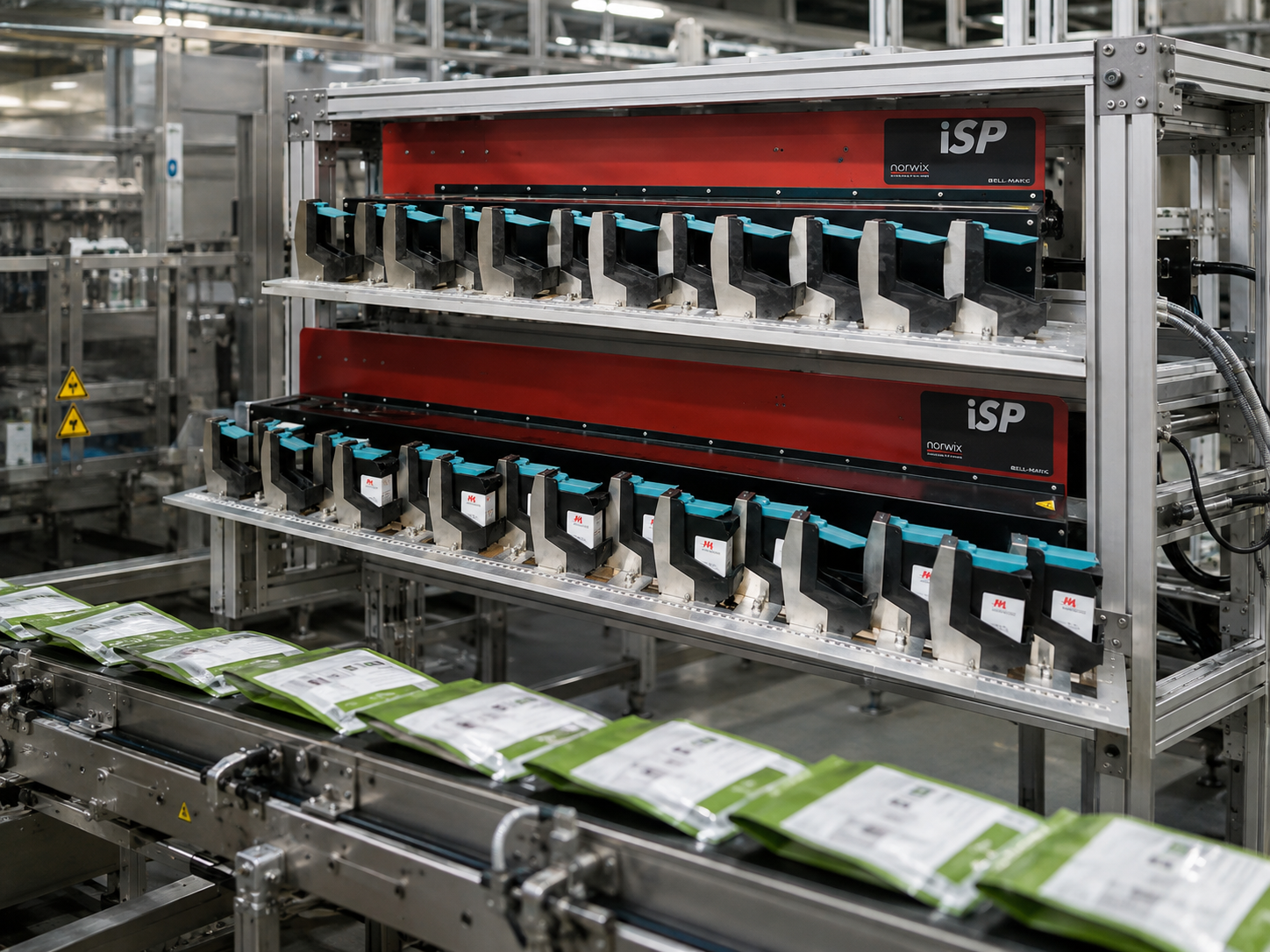
Explore continuous inkjet, thermal inkjet, laser marking, large-character coding, and flexible packaging systems selected around the substrate, the code required, the production speed, and how the product moves through the line.

Explore Coding & Marking Solutions
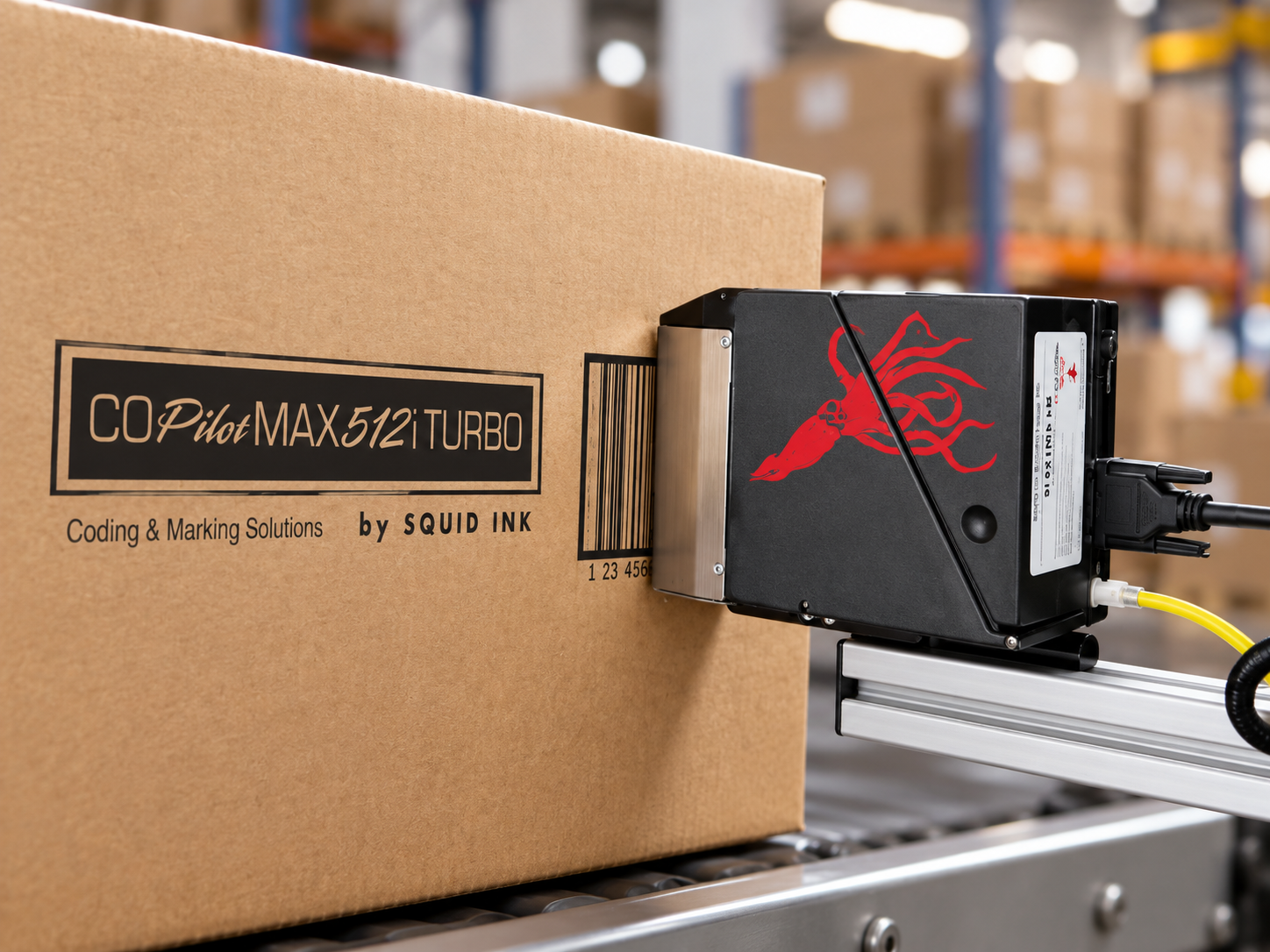
Squid Ink CoPilot MAX 512i TURBO system printing a barcode on a corrugated case

What Is Coding & Marking Equipment?

Coding and marking equipment applies variable information to a product or its packaging during production. The printed or marked content typically identifies when and where an item was made, what it contains, and how it can be traced through distribution.

Different technologies exist because materials behave differently. Ink that performs well on corrugated board may not adhere to a treated film, and a laser that marks coated paper cleanly may produce no contrast on bare plastic.

For that reason, coding equipment is selected around the substrate, the code content, the line speed, and how consistently the product presents itself to the print position rather than around a single specification.

Explore Coding & Marking Equipment Types

Each pathway groups equipment by the way the code is applied and the kind of material it is applied to.

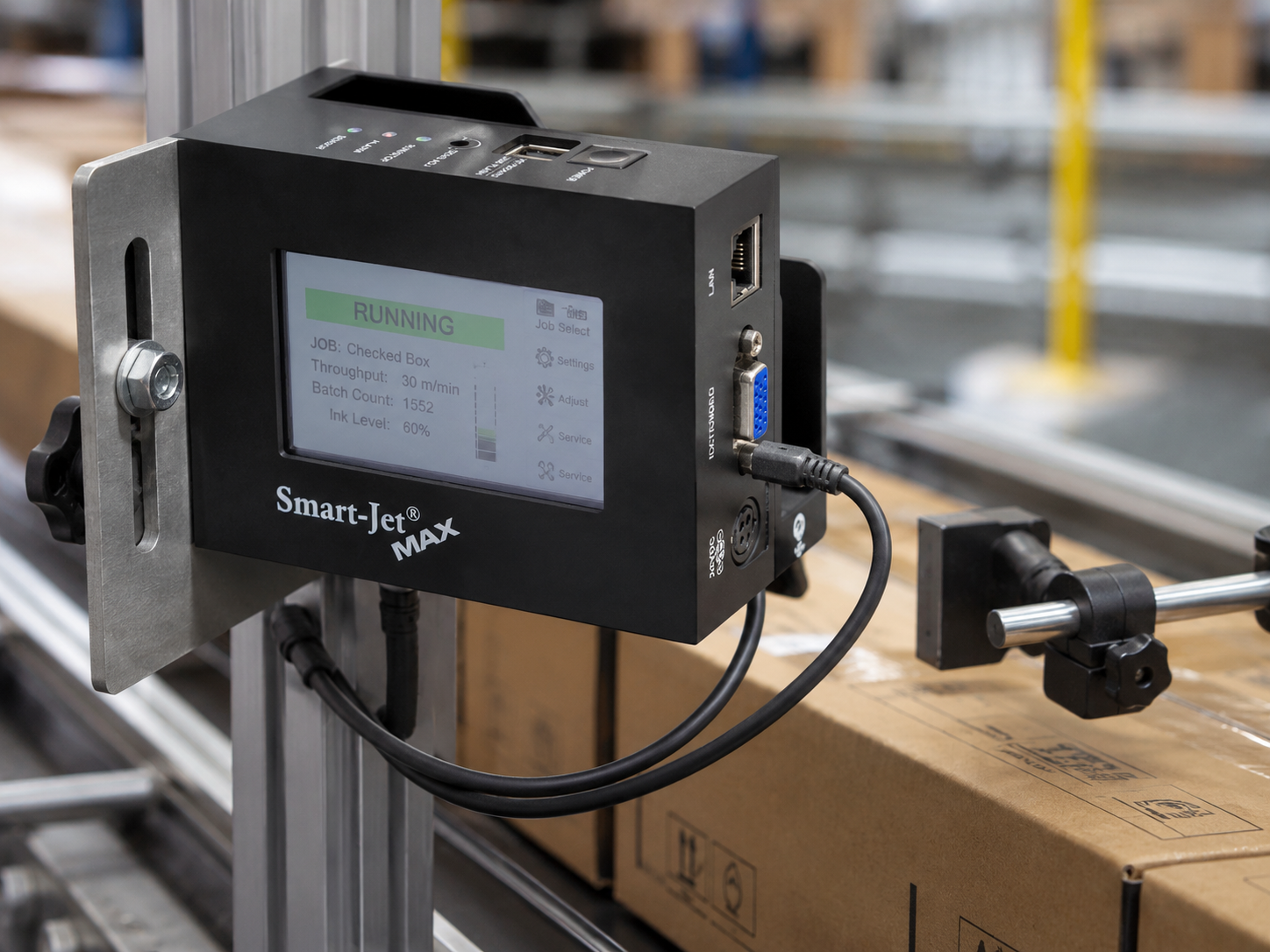
Continuous Inkjet Printers

Apply small-character dates, lot codes, batch numbers, and identification to products and packaging without contacting the surface, including curved, recessed, and irregular shapes.

CIJ systems are often selected for high line speeds, non-porous substrates, and applications where the printhead cannot be held close to the product.

Explore Continuous Inkjet Printers

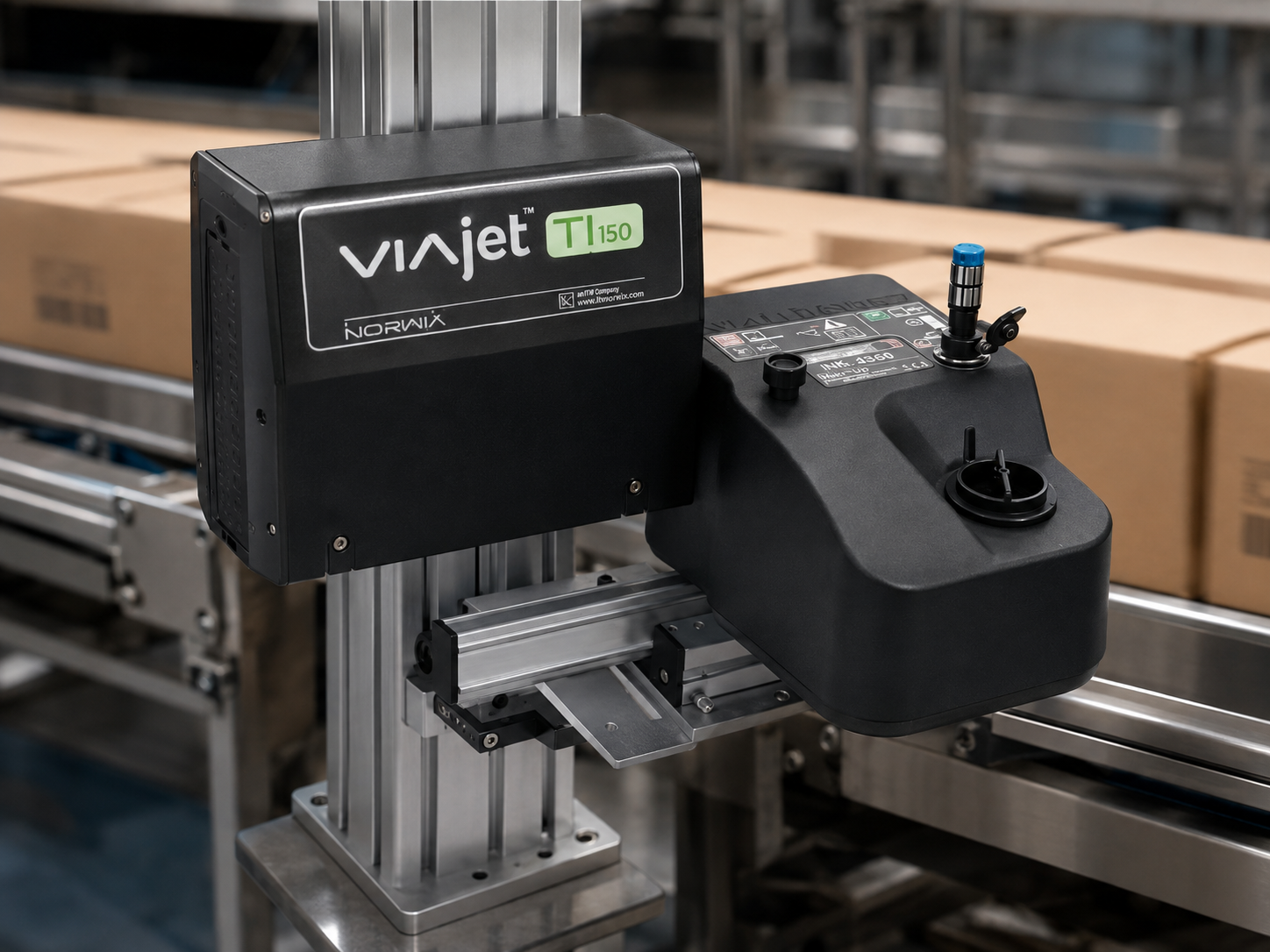
Thermal Inkjet Printers

Print high-resolution text, barcodes, 2D codes, and graphics onto cartons, labels, film, and packaging using cartridge-based systems that require minimal maintenance.

TIJ systems suit applications where code clarity and scannable symbology matter more than long throw distance.

Explore Thermal Inkjet Printers

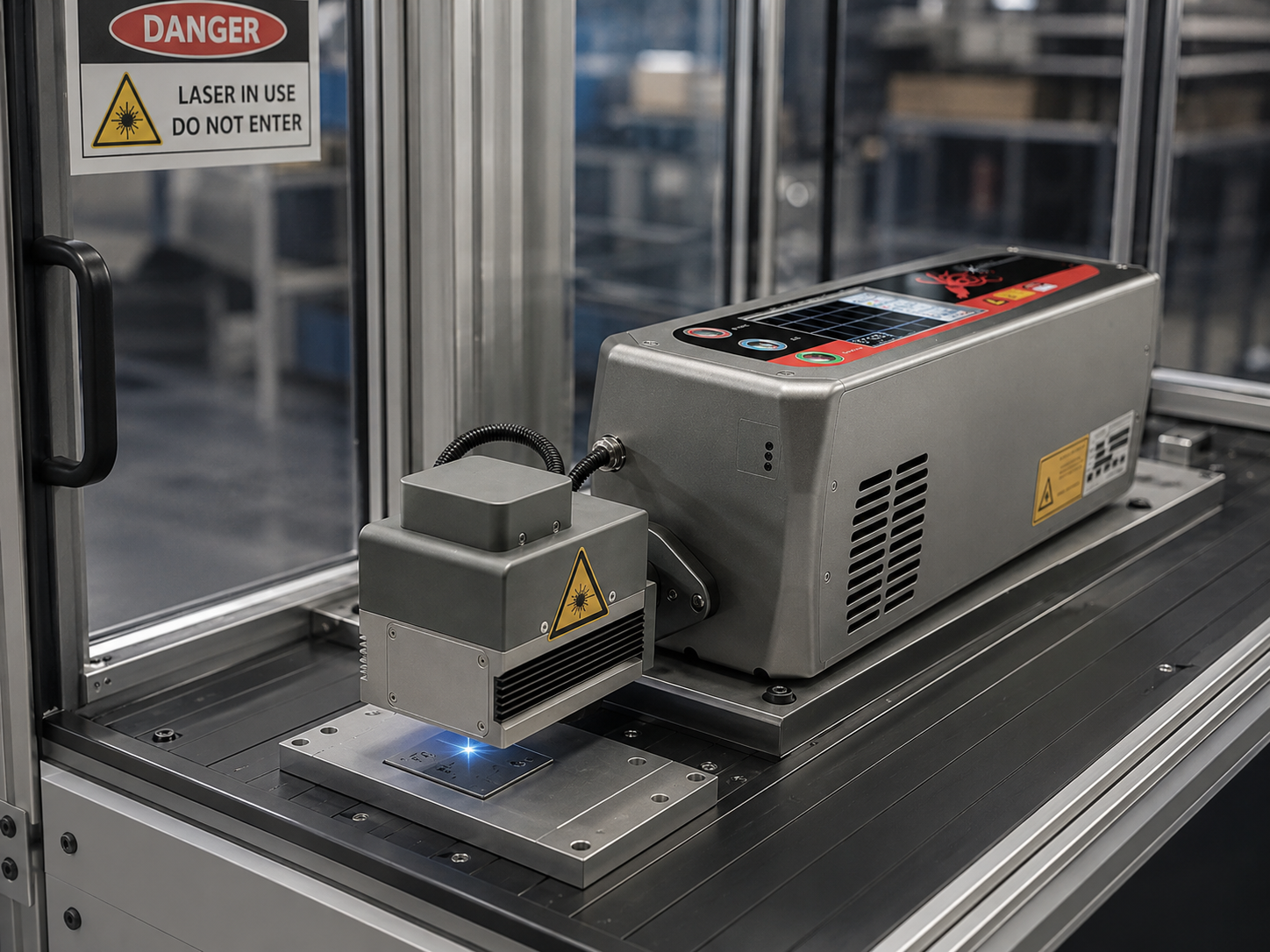
Laser Marking Systems

Create permanent, consumable-free marks on coated papers, plastics, films, glass, and metals using CO2, fiber, and UV laser technologies matched to the material.

Laser applications are evaluated as a system, including wavelength, power, focal distance, safety enclosure, and fume extraction.

Explore Laser Marking Systems

What Determines the Right Coding Technology?

Four areas usually narrow the field faster than comparing published print speeds.

Substrate and Surface

Identify the exact material, whether it is porous or nonporous, any coating or treatment, and whether the surface is flat, curved, recessed, or flexible.

Code Content and Size

Define the number of lines, character height, and whether the code includes barcodes, 2D symbols, graphics, or logos that must be scannable or verified.

Line Speed and Product Presentation

Review production speed, product spacing, orientation, and how consistently each item presents itself to the print or marking position.

Environment, Data, and Integration

Consider wash-down, dust, temperature, and moisture conditions along with where print data originates, how jobs are selected, and how the system connects to line controls.

ATP uses this information to help identify whether the application calls for continuous inkjet, thermal inkjet, laser marking, large-character coding, or a packaging-integrated system.

Discuss Your Coding Application

Coding & Marking Equipment Manufacturers

Explore approved manufacturers supporting continuous inkjet, thermal inkjet, laser, large-character, and flexible packaging coding applications.

  • Norwix Marking Systems logo
    Norwix Marking Systems
  • Leibinger logo
    Leibinger
  • MSSC logo
    MSSC
  • Matthews Marking Systems logo
    Matthews Marking Systems
  • Squid Ink logo
    Squid Ink

Related Solution

Coding & Marking Solutions

Explore how code content, substrates, production speed, product handling, inspection, data requirements, and downstream processes determine the appropriate coding technology.

Need Help Beyond Equipment Selection?

Labeling & Print-and-Apply Equipment

Explore printed and applied labels when the application requires a specific label format, material, or placement rather than a direct code.

Explore Labeling & Print-and-Apply Equipment

Integrated Systems

Connect printers, lasers, sensors, conveyors, cameras, inspection, rejection, and production data into one coordinated workflow.

Explore Integrated Systems

Service & Support

Find installation, training, preventive maintenance, troubleshooting, and repair support for eligible coding and marking equipment.

Explore Service & Support

Coding & Marking Equipment FAQs

What is coding and marking equipment?

Coding and marking equipment applies variable information such as dates, lot codes, batch numbers, barcodes, 2D codes, serial numbers, and product identification directly onto products, packaging, cases, films, and industrial materials as they move through production.

What is the difference between CIJ, TIJ, and laser marking?

Continuous inkjet is a non-contact small-character technology suited to curved, irregular, and fast-moving products. Thermal inkjet uses ink cartridges to produce higher-resolution text, barcodes, and graphics. Laser marking changes the surface of the material itself, producing a permanent mark with no ink or ribbon.

Can coding equipment be added to an existing production line?

In many cases it can. Compatibility depends on available mounting space, line speed, product presentation and spacing, the distance from the printhead or marking head to the surface, ink or laser compatibility with the substrate, and how the system is triggered by the existing machine.

What information does ATP need to recommend a coding system?

Helpful details include the substrate, the code content and size, any barcode or 2D requirements, line speed, print position, the operating environment, existing equipment, inspection or verification requirements, and photographs, video, or samples of the product.
Find the Right Coding & Marking System

Tell ATP Equipment Solutions what must be printed, the material it lands on, how fast the line runs, and how the code is inspected downstream.