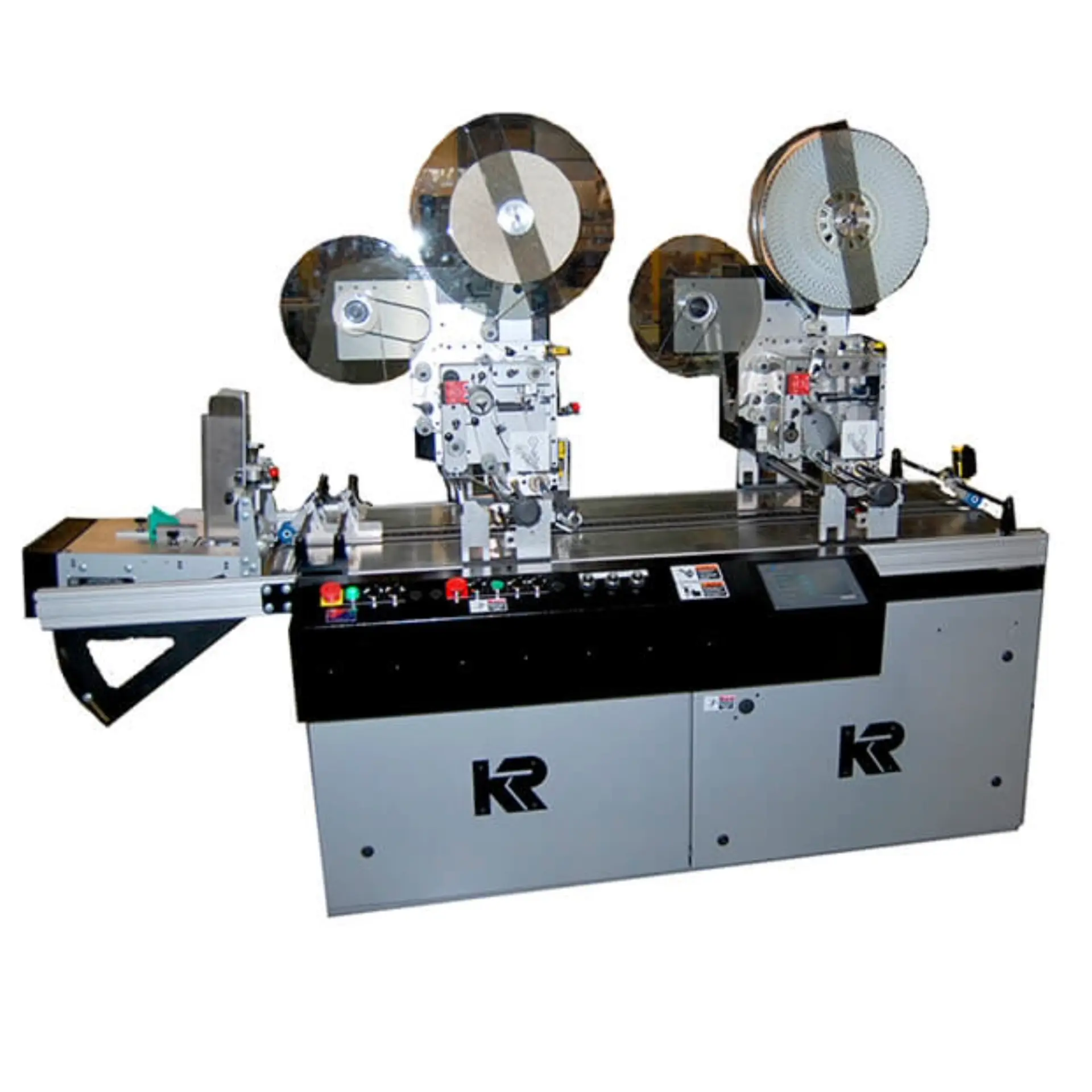
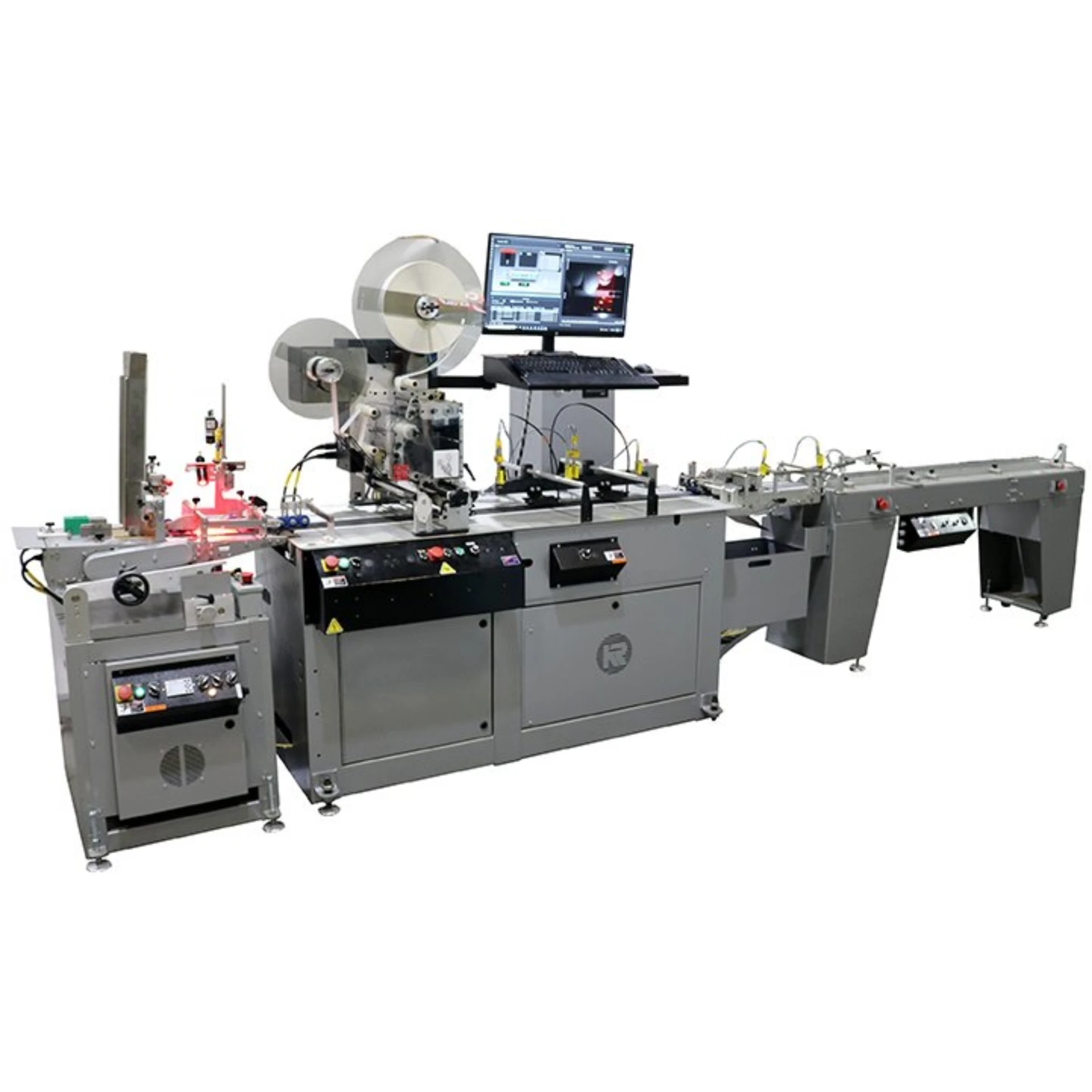
Apply, encode, read, and verify RFID labels and tags using equipment configured around the product, inlay, production data, throughput, and validation requirements.
Kirk-Rudy RFID systems combine label application with transport, encoding, reading, barcode inspection, and production-line integration.
Apply a pre-encoded or separately managed RFID label to a compatible product or package.
RFID Labeling, Encoding & Validation
Apply the label, write data to the RFID chip, read the result, and validate the tag within one coordinated production process.
The correct approach depends on where encoding occurs, what data is written, how the item is handled, and what validation records the operation requires.
What Determines the Right RFID System?
Five areas shape the configuration of an RFID labeling or encoding workflow.
RFID Label, Tag, and Inlay
Identify the label construction, tag format, and inlay type, since these influence handling, placement, and how the tag behaves during encoding and reading.
Product Material and Label Placement
Evaluate the product material and where the label must be applied, as the surrounding material affects the entire application.
Encoding and Data Requirements
Define what must be written to the chip, where that data originates, and how records are matched to individual products.
Production Speed and Product Handling
Review throughput, product spacing, and how consistently each item can be transported through application, encoding, and reading positions.
Reading, Validation, and System Integration
Consider whether tags must be read and validated after encoding, how failures are handled, and how results are reported to production systems.
Related Equipment Pathways
Modular Label Applicators & Flat-Product Systems
Review the modular label heads and transport platforms that RFID configurations are built around.
Explore how products, labels, application methods, variable data, line speed, inspection, and downstream processes determine the appropriate labeling approach.
Connect label applicators, print engines, feeders, conveyors, scanners, cameras, production data, verification, and line controls into a coordinated workflow.
An RFID labeling system applies a label or tag containing an RFID inlay to a product or package as it moves through production. The application itself resembles conventional labeling, but the inlay adds requirements around placement, handling, and the material beneath the label.
What is the difference between applying and encoding an RFID label?+
Applying places a label or tag that may already be encoded or managed elsewhere. Encoding writes digital information to the RFID chip as part of the process, which requires the data source, write step, and any reading or validation to be coordinated within the same workflow.
Can RFID systems verify a tag after encoding?+
Many systems include reading and validation so the encoded tag is checked before the item continues. What can be validated, and how reliably, depends on the inlay, product material, reader configuration, and the surrounding production environment.
What information does ATP need to evaluate an RFID application?+
Useful details include the label or tag and inlay, the product material and dimensions, required label placement, what data must be encoded, where that data originates, the required throughput, and the reading or validation records the operation must retain.
Evaluate Your RFID Labeling Workflow
Describe the tag, the product, the data, and the validation the operation requires, and ATP can help scope an appropriate RFID application or encoding workflow.