Labeling & Print-and-Apply Equipment

Modular Label Applicators & Flat-Product Systems

Apply preprinted labels to cards, mailpieces, envelopes, flat cartons, pouches, packages, and other flat products using modular label heads and transport-based production systems.

These systems can operate as standalone labeling platforms or connect with feeders, transport bases, verification, and other production equipment.

Explore Labeling & Print-and-Apply Solutions

Explore Modular Labeling Systems

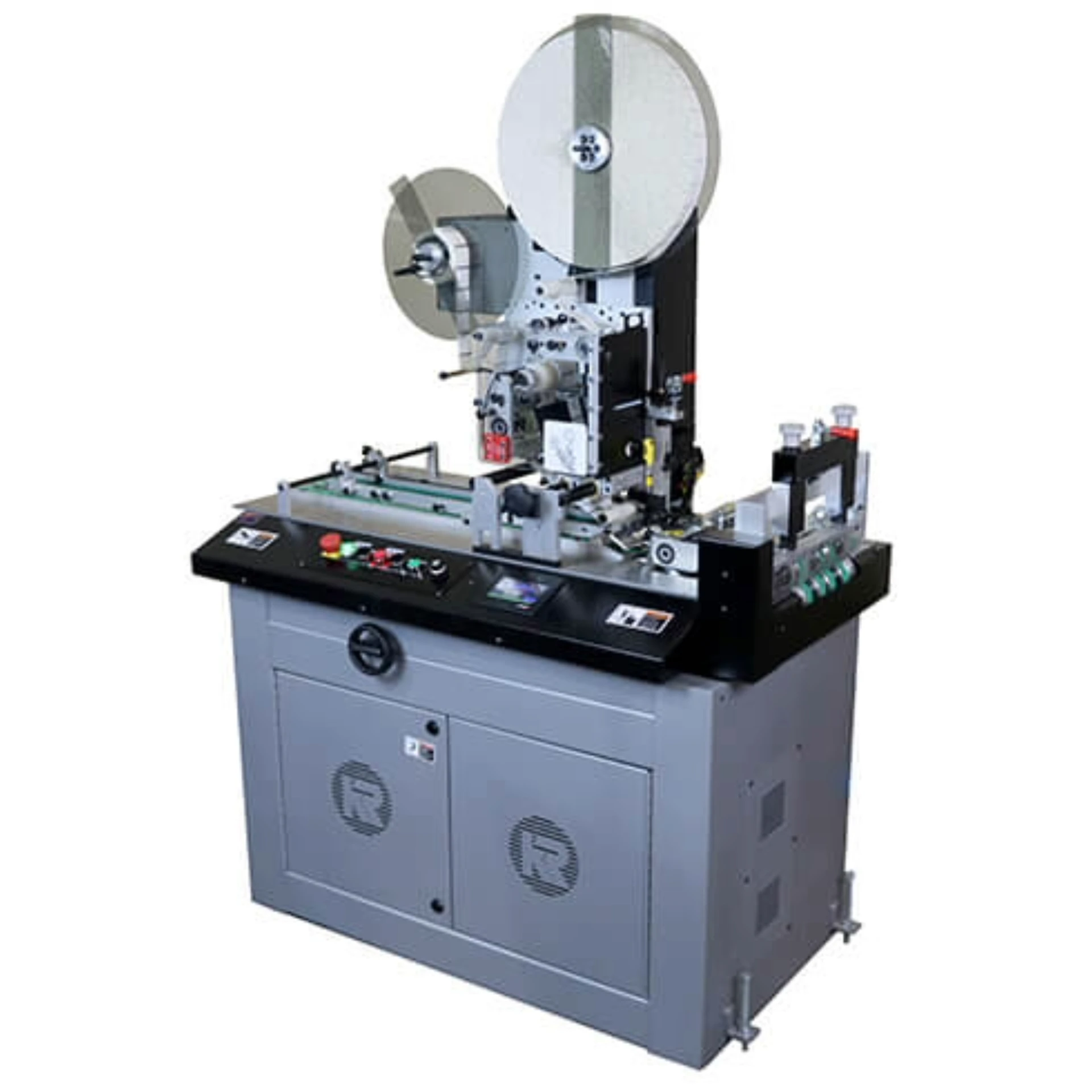
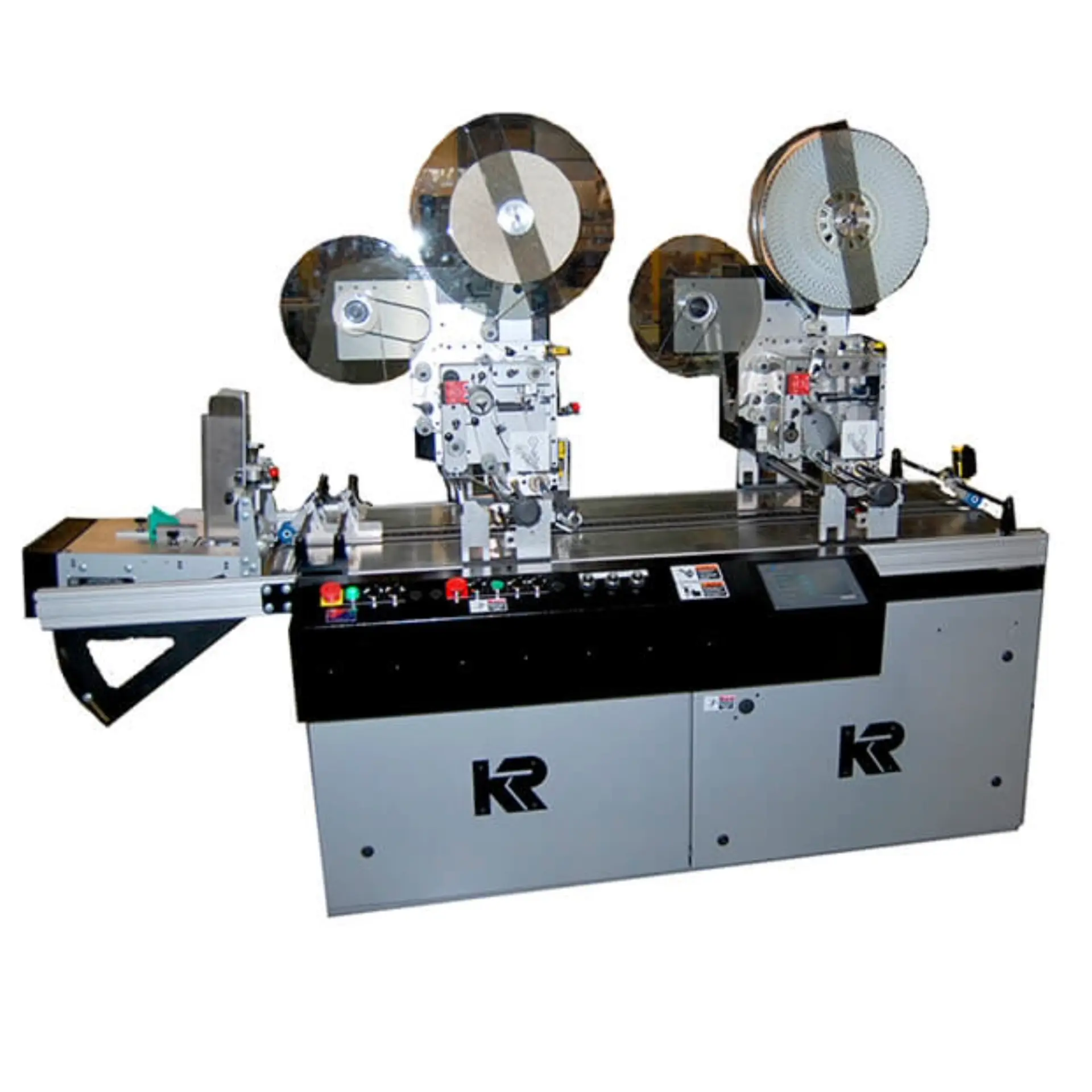
Kirk-Rudy contributes modular label heads and transport-based platforms, while Pineberry integrates application-specific flat-product systems.

Kirk-Rudy Modular Labeling

Modular label heads and production transports configured for flat products and connected production lines.

Pineberry Flat-Product Labeling

Application-specific systems combining feeding, transport, and label application for flat and semi-flat packaging.

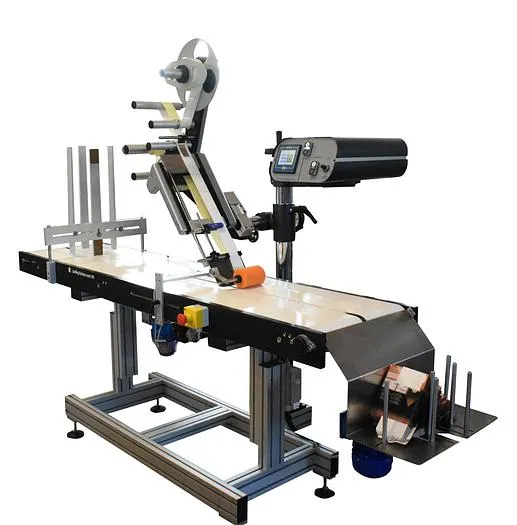
Pineberry M3005R robotic flat-product and pouch labeling system with conveyor and label applicator

Pineberry

Flat-Product & Pouch Labeling Systems

Pineberry-integrated systems for feeding and labeling flat cartons, envelopes, pouches, bags, cards, and other flat or semi-flat products.

Representative applications: flat-carton labeling, envelope labeling, bag and pouch labeling, excise- and tax-stamp application, shuttle-feeder labeling systems.

  • Flat-carton and envelope labeling
  • Bag, pouch, and card handling
  • Feeder and conveyor integration

Pineberry systems may combine friction feeders, conveyors, label applicators, sensors, cameras, and other components based on the application.

What Determines the Right Modular Labeling System?

Five areas usually decide whether a label head alone is sufficient or a complete transport-based system is required.

Product Type and Flatness

Evaluate the material, thickness, stiffness, and whether the piece stays flat as it moves. Curled, bowed, or flexible items need more control beneath the label head.

Feeding and Product Separation

Determine whether pieces are already separated on a line or must be fed individually from a stack, and how reliably the material can be singulated.

Label Dimensions and Placement

Confirm label size, roll construction, the number of labels per piece, and how tightly placement must be held on each product.

Line Speed and Product Gap

Review the required throughput along with the gap between pieces, since the applicator must complete its cycle within the available window.

Transport, Verification, and Integration

Consider the transport base, downstream equipment, and whether scanning, camera verification, or production data must be part of the process.

Related Equipment Pathways

Product & Container Labeling Systems

Review dedicated systems when the item is a bottle, jar, vial, tub, or other rigid container rather than a flat product.

Explore Product & Container Labeling Systems

Print-and-Apply Labeling Systems

Consider print-and-apply when the label content changes from piece to piece rather than arriving preprinted.

Explore Print-and-Apply Labeling Systems

Print & Mail Equipment

Explore feeders, transports, addressing, tabbing, and finishing equipment used alongside flat-product labeling.

Explore Print & Mail Equipment

Integrated Systems

Connect label heads, feeders, transports, verification, and controls into one coordinated production workflow.

Explore Integrated Systems

Related Solution

Labeling & Print-and-Apply Solutions

Explore how products, labels, application methods, variable data, line speed, inspection, and downstream processes determine the appropriate labeling approach.

Integrated Systems

Connect label applicators, print engines, feeders, conveyors, scanners, cameras, production data, verification, and line controls into a coordinated workflow.

Explore Integrated Systems

Service & Support

Request installation, training, preventive maintenance, troubleshooting, and repair support for eligible labeling equipment.

Explore Service & Support

Frequently Asked Questions

What is a modular label applicator?

A modular label applicator is a label head that dispenses and applies preprinted pressure-sensitive labels without being tied to one dedicated product-labeling machine. It can be mounted on a transport base, feeder, conveyor, or compatible production equipment so the labeling function is added where it is needed.

Can a label applicator be added to an existing transport?

In many applications it can. The evaluation covers available mounting space, how the product is held and moved beneath the head, the trigger signal, line speed and product gap, label size, and whether the surrounding equipment can maintain consistent presentation.

What types of flat products can be labeled?

Cards, mailpieces, envelopes, folded pieces, flat cartons, pouches, bags, and similar flat or semi-flat items are common. The practical limits depend on the material, thickness, flatness, and how reliably individual pieces can be separated and transported.

What information does ATP need to evaluate a modular system?

Useful details include product samples or dimensions, material and thickness, label size and placement, required throughput, existing feeders or transports, available floor space, and any verification, scanning, or data requirements.
Build the Right Modular Labeling Configuration

Describe the product, the label, and the equipment already on the line, and ATP can help determine whether a label head, a transport-based platform, or an integrated system fits.

  • What needs to be labeled
  • Product or package dimensions
  • Product shape and surface
  • Label size and construction
  • Required label placement
  • Production speed
  • Preprinted or variable data
  • Existing equipment
  • Verification requirements
  • Photographs, video, or samples