Print product information, lot codes, barcodes, graphics, shipping data, and large industrial marks directly onto cartons, cases, bags, lumber, building products, and other compatible materials.
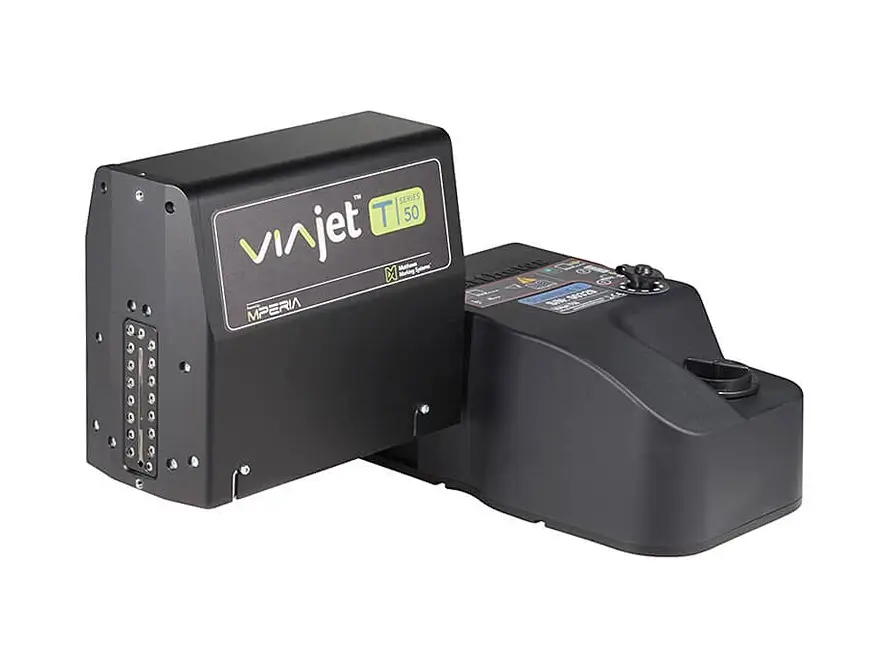
Available technologies include wide-format thermal inkjet, high-resolution piezo, and drop-on-demand large-character systems.
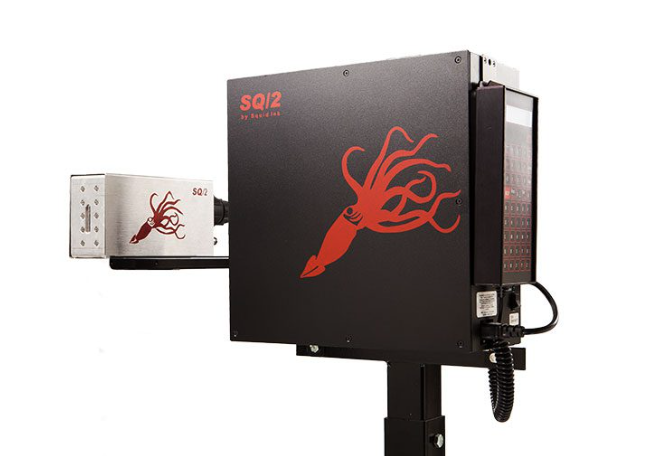
A broad family of high-resolution piezo inkjet systems covering multiple print heights, orientations, throw distances, ink types, and direct case-coding requirements.
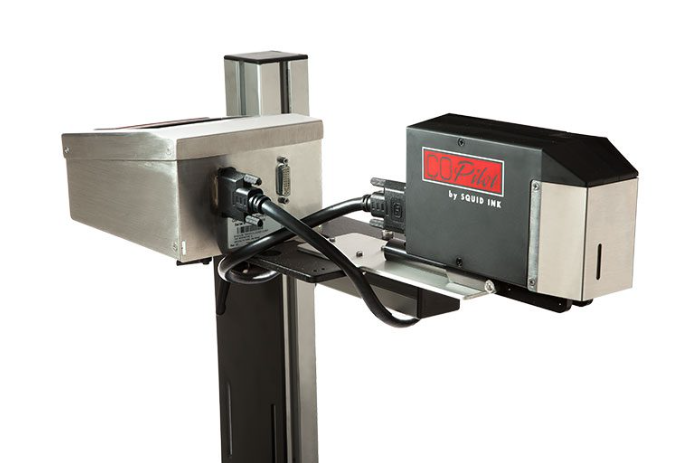
Includes CoPilot, CoPilot 128, CoPilot 256, CoPilot Flex, CoPilot 500, CoPilot Max, CoPilot Max 512i, CoPilot Gemini, and CoPilot Max LT
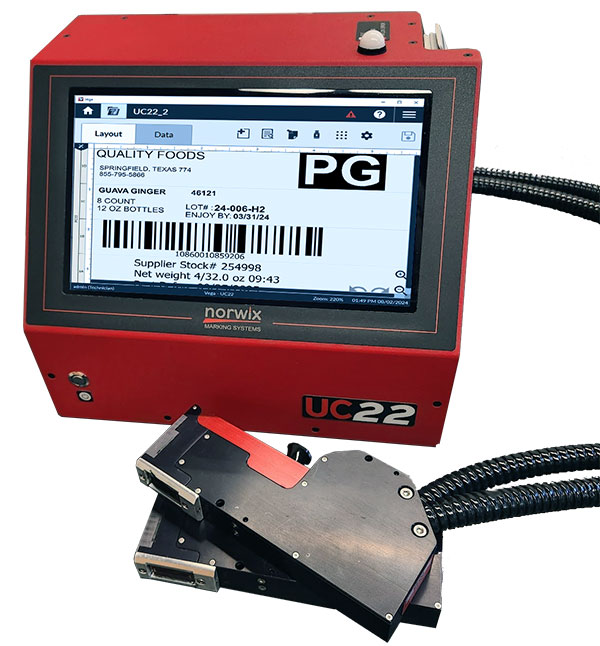
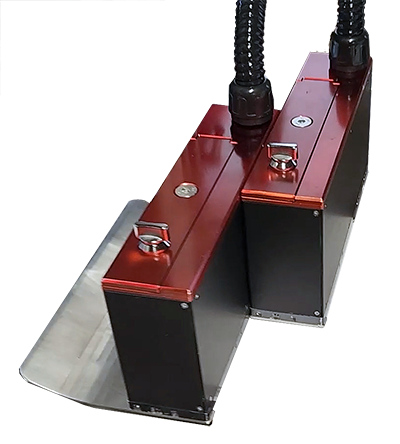
The Norwix .CORE, .WING, and .TOTAL platforms and the MSSC Smart-Jet BLUE MAX, DUO, and HEX configurations can also be arranged for high-resolution case and carton coding. Their full records live on the thermal inkjet page rather than being duplicated here.
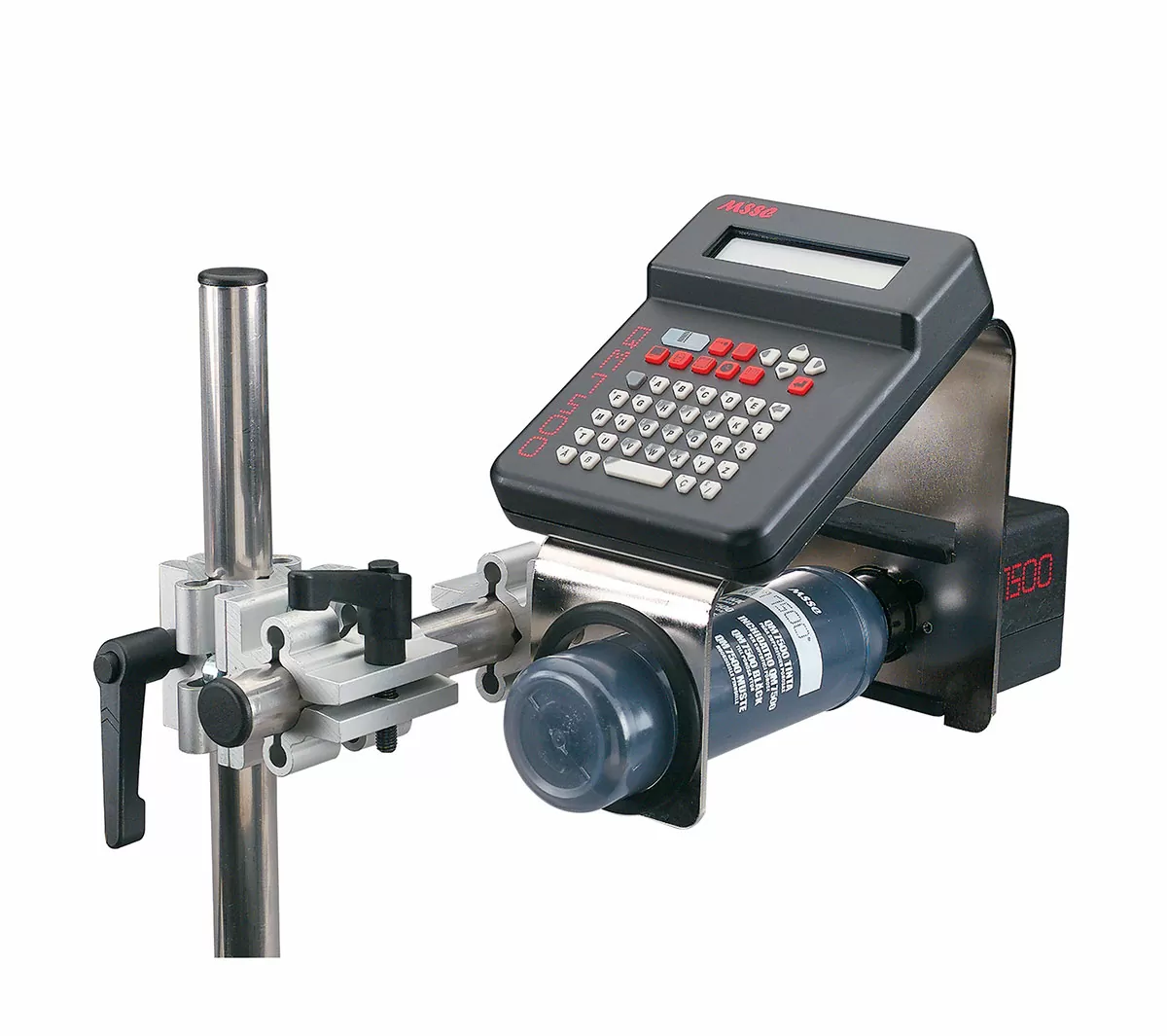
A family of drop-on-demand systems for larger dot-matrix text and variable codes on cartons, packaging, plastics, stretch wrap, metals, wood, and other industrial materials.
What Determines the Right Case or Large-Character Coder?
Five practical questions usually settle the choice between high-resolution and large-character printing.
Case, Carton, or Material
Identify the substrate and its surface. Kraft corrugated, coated board, poly bags, lumber, and stretch wrap all absorb ink differently and tolerate different throw distances.
Required Print Height and Image
Define the total printed height and whether the content is a few lines of text or a full panel with graphics. Taller content generally means a taller printhead or multiple stitched heads.
Barcode and Graphics Requirements
Confirm the symbology, code size, and whether a verified grade is required. Scannable barcodes and logos point to high-resolution systems rather than large-character dot-matrix output.
Conveyor Speed and Product Presentation
Review line speed, gaps between cases, and how squarely and consistently the product passes the print position. Unstable or skewed cases affect quality more than raw speed does.
Porous or Nonporous Ink Requirements
Determine whether the surface absorbs ink or requires a fast-drying solvent formulation, and whether the code must survive handling, moisture, cold storage, or outdoor exposure.
Related Equipment Pathways
Thermal Inkjet Printers
Review the full TIJ collection, including the platforms that can be configured for wide-format case coding.
Explore how code content, substrates, production speed, product handling, inspection, data requirements, and downstream processes determine the appropriate coding technology.
Connect printers, lasers, sensors, conveyors, product handling, cameras, inspection, rejection, production data, and line controls into a coordinated workflow.
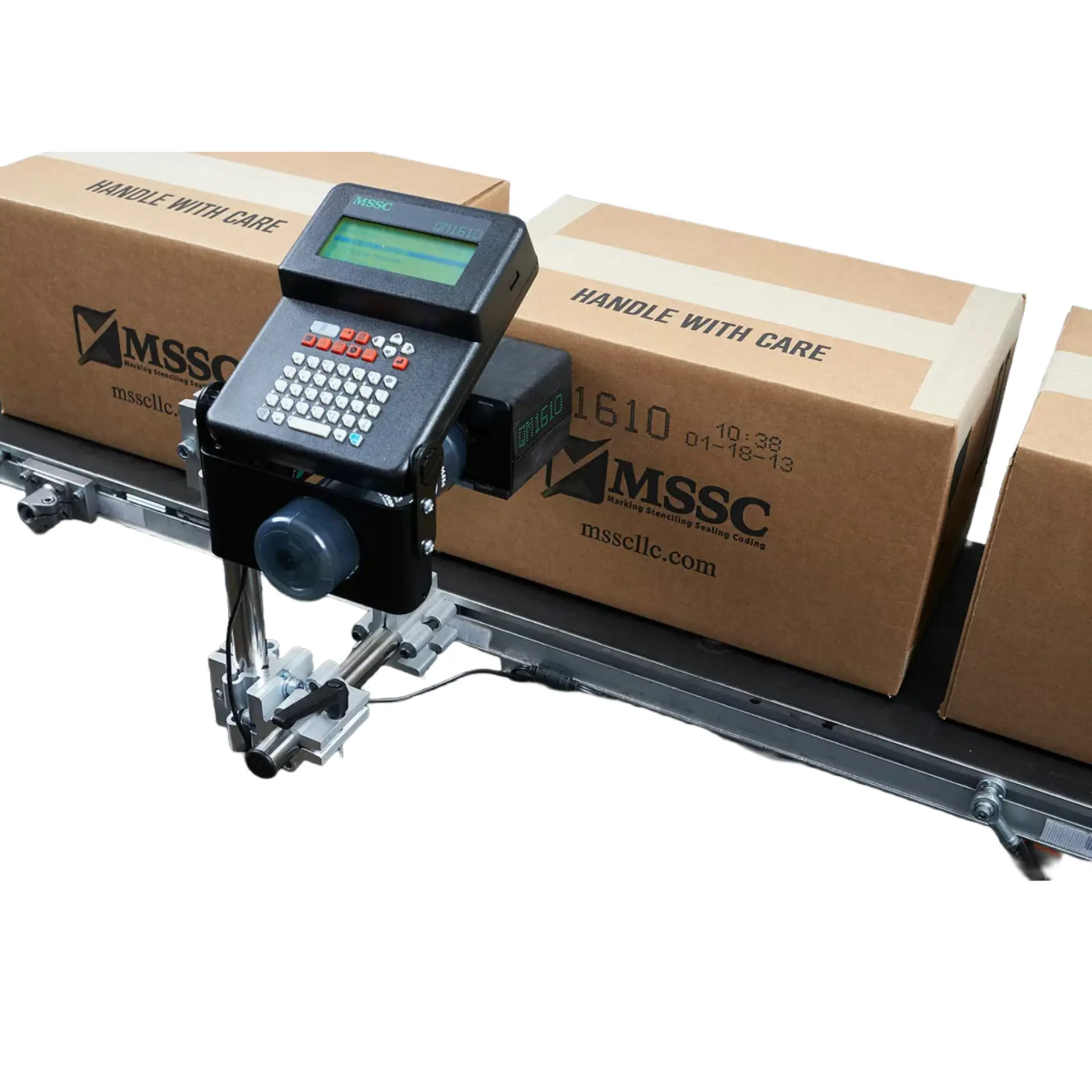
Direct case coding prints product information onto a plain shipping case as it moves through the line, instead of using preprinted cases or applying a separate printed label. It removes label inventory and allows the content to change from job to job without changing packaging.
What is the difference between high-resolution and large-character coding?+
High-resolution systems produce fine text, scannable barcodes, and graphics with smaller drops and a shorter throw distance. Large-character drop-on-demand systems produce bold dot-matrix marks that stay legible from a distance and tolerate rougher surfaces and longer throw distances.
Can case coding replace a label?+
In many operations it can, provided the printed content, barcode grade, contrast, and any customer or retailer requirements can be met by printing directly on the corrugated surface. Where a specific label format, color, or material is mandated, labeling equipment remains the appropriate approach.
What information does ATP need to recommend a case coder?+
Helpful details include the case or material, the required print height and content, whether barcodes must be scannable or verified, the conveyor speed, how squarely and consistently the product presents itself, the available mounting space, and whether the surface is porous or coated.
Find the Right Case-Coding System
Describe the case, the content, and the conveyor, and ATP can help identify whether a high-resolution or large-character system fits the line.