Apply small-character dates, lot numbers, serial numbers, text, and barcodes to products moving through high-speed production with non-contact continuous inkjet technology.
CIJ systems can support curved, irregular, porous, and nonporous products when the printer, ink, environment, code, and line requirements are properly matched.
The systems below cover entry-level, mid-range, specialized, and high-speed continuous inkjet coding. Configurations, ink types, and mounting options vary by application.
Leibinger
Leibinger continuous inkjet printers span entry-level coding through configurable and high-speed production platforms.
Leibinger
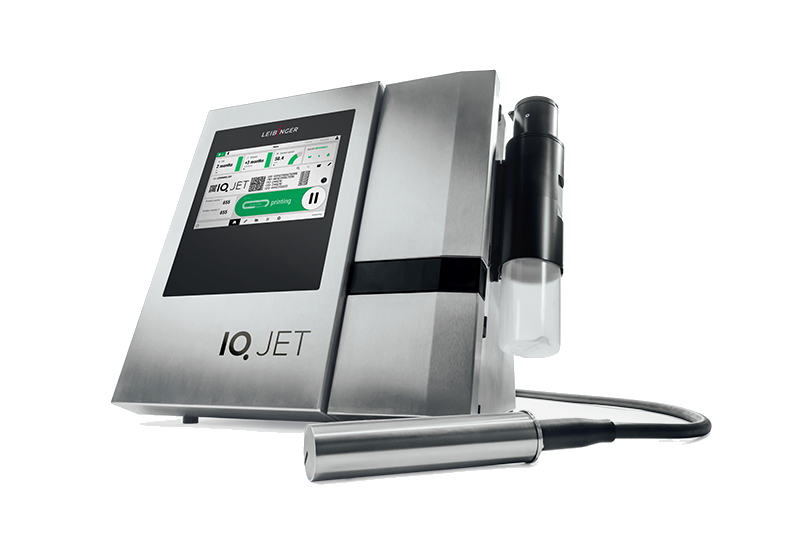
IQJET
Intelligent CIJ
An intelligent continuous inkjet platform for operations where reliable startup, minimal operator intervention, predictable ownership costs, and sustained production uptime are priorities.
Best For
General industrial coding operations seeking a highly autonomous CIJ platform with simplified daily operation.
Performance
Plug-and-Print operation, consistent print quality, low consumption, and broad compatibility across common industrial substrates.
Low-Maintenance Design
IQPRINT keeps the ink system airtight during production pauses to help prevent drying and clogging. IQJET is designed for five years without scheduled maintenance.
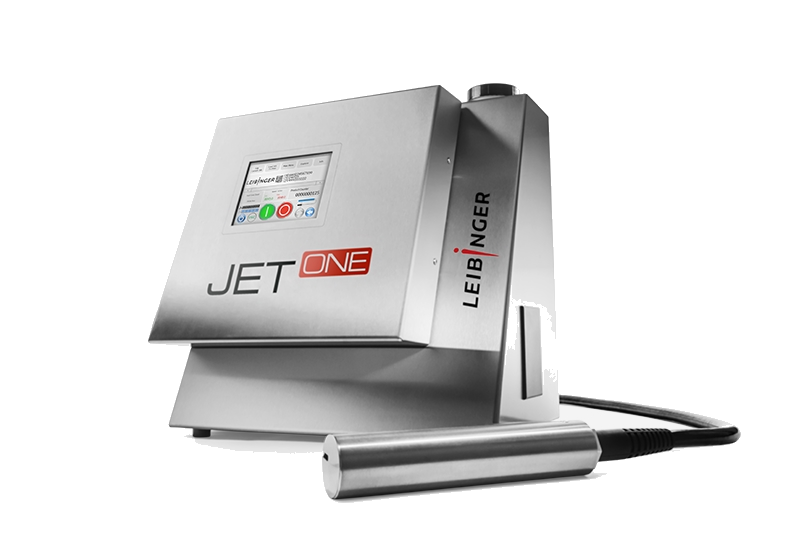
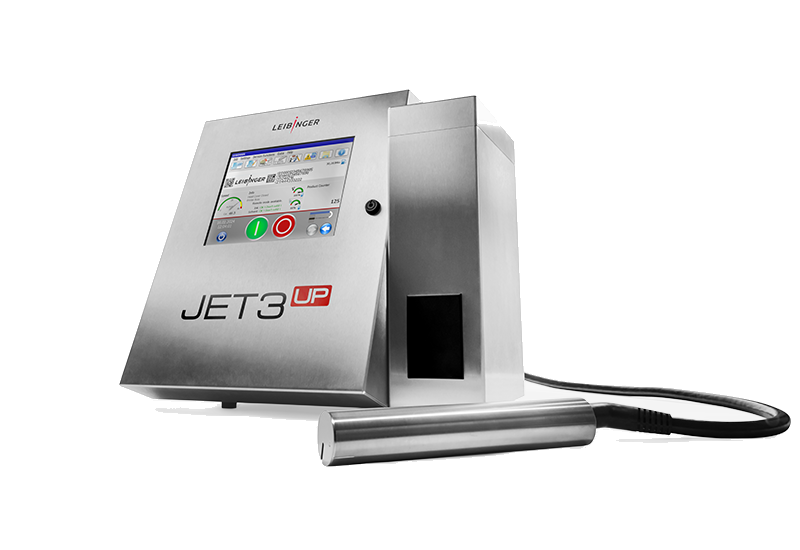
An advanced, configurable CIJ family for complex or specialized coding environments that require greater performance, application flexibility, or environmental protection.
Best For
Demanding applications involving higher line counts, pigmented inks, washdown conditions, fine micro-printing, or specialized production requirements.
Performance
Prints up to five lines at speeds up to 403 meters per minute, with more than 800 functions and multiple application-specific configurations.
Low-Maintenance Design
Sealtronic helps eliminate routine nozzle cleaning and rinsing by sealing the ink circuit airtight when the printer is not operating.
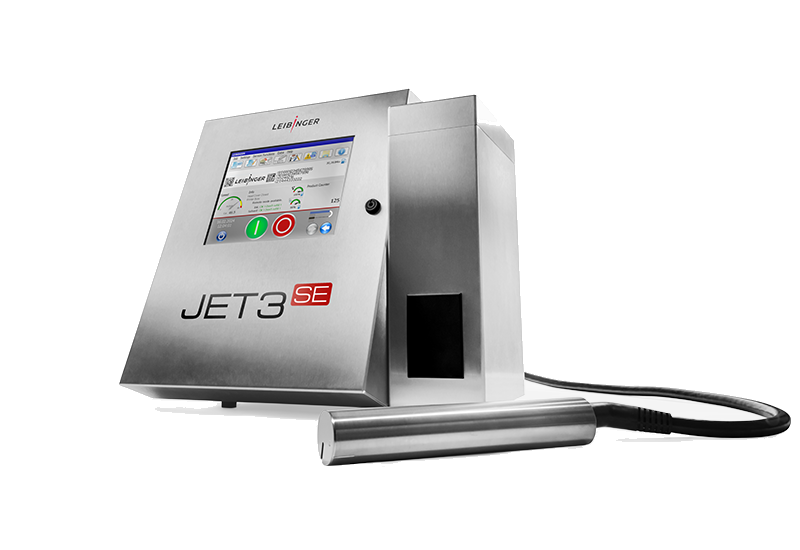
Family Includes: JET3 UP, JET3 UP PI, JET3 UP PRO, and JET3 UP MI
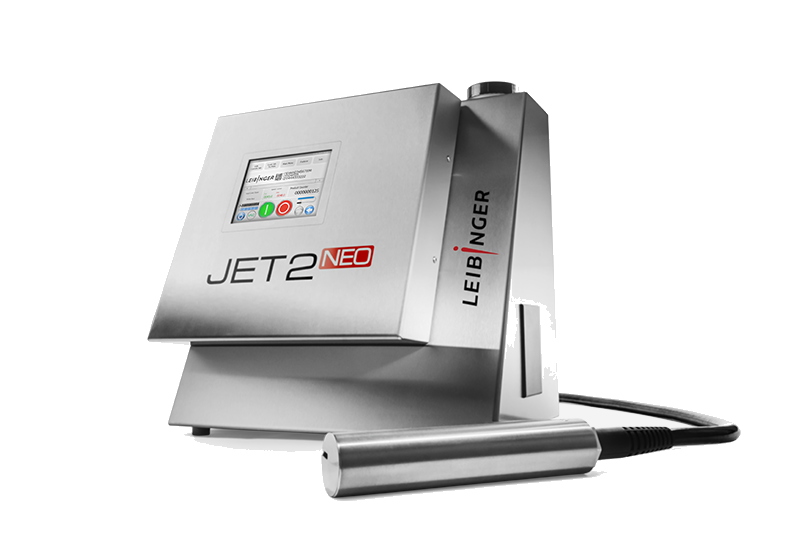
A preconfigured CIJ family that delivers advanced JET3 performance for operations that do not require the full configuration flexibility of the JET3 UP.
Best For
Customers seeking high-output coding capability and proven LEIBINGER reliability with a lower initial capital requirement.
Performance
Prints up to five lines at speeds up to 403 meters per minute, with standard and pigmented-ink configurations available.
Low-Maintenance Design
Sealtronic helps reduce clogging and frequent printhead cleaning while maintaining the startup reliability expected from the JET3 platform.
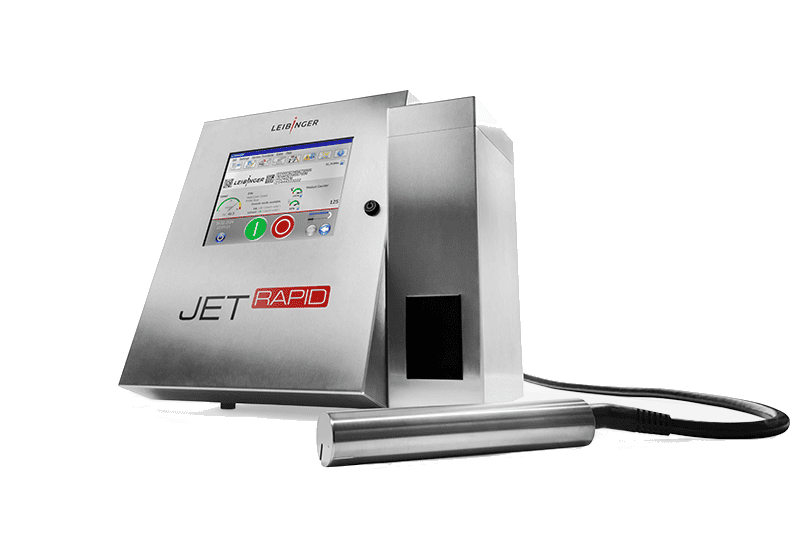
A specialist high-speed CIJ family for demanding production environments where code quality must be maintained at elevated line speeds.
Best For
High-output food, beverage, extrusion, wire, cable, pipe, and other fast-moving production applications.
Performance
JET RAPID supports single-line printing up to 800 meters per minute. Wire, cable, and pipe configurations can reach speeds up to 1,000 meters per minute.
Low-Maintenance Design
Sealtronic helps reduce clogging and frequent printhead cleaning while supporting dependable operation in high-speed production.
Family Includes: JET RAPID, JET RAPID WIRE, and JET RAPID WIRE PI
Squid Ink small-character CIJ systems cover general coding, higher-speed operation, harsh environments, and pigmented-ink contrast.
Squid Ink
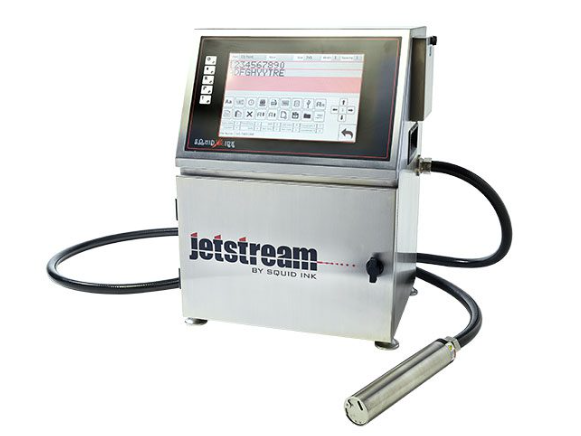
JetStream CIJ Family
A family of small-character continuous inkjet systems covering general coding, higher-speed operation, harsh environments, and high-contrast pigmented-ink applications.
Includes JetStream, JetStream Sonic, JetStream IP, and JetStream PX
Related accessory: JetWash is a cleaning and wash-station accessory for compatible JetStream printheads. It is an accessory rather than a printer.
Advanced Small-Character Inkjet
Matthews MPERIA Axian AX1000
Axian uses Matthews XIJ technology. It is not a traditional CIJ or TIJ printer, and it is presented separately so the technology is not confused with the small-character systems above.
The platform is designed to combine high-speed multi-line and 2D-code production with a clean, replaceable jetting system, which changes how routine maintenance is handled compared with a conventional circulating ink system.
Matthews Marking Systems
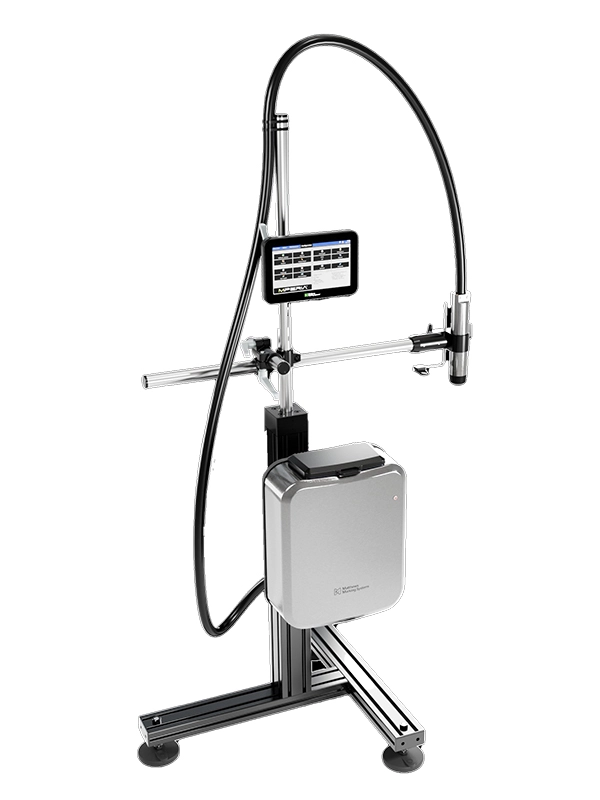
MPERIA Axian AX1000
An advanced small-character inkjet platform built on Matthews XIJ technology, combining high-speed multi-line and 2D-code production with a clean, replaceable jetting system.
XIJ technology — not a traditional CIJ or TIJ printer
What Determines the Right Continuous Inkjet System?
Four areas usually narrow the field faster than comparing published print speeds.
Product and Substrate
Identify the material, surface finish, curvature, temperature, and whether the item is porous or nonporous. A code that looks clean on coated board may behave very differently on a wet bottle or an extruded plastic profile.
Code Size and Number of Lines
Define the character height, number of lines, and whether barcodes or 2D codes are required. More lines and smaller characters place tighter demands on the printer, the ink, and the stability of the product as it passes the printhead.
Line Speed and Print Distance
Review the maximum production speed, product spacing, and the distance between the printhead and the product. Longer throw distances reduce achievable resolution, so mounting position is part of the selection decision.
Ink, Contrast, and Operating Environment
Consider the required contrast, dry time, resistance to handling or moisture, and whether the area involves washdown, dust, condensation, or high temperatures. These conditions influence both the ink and the printer configuration.
Related Equipment Pathways
Thermal Inkjet Printers
Compare cartridge-based systems when the application needs higher-resolution text, graphics, or 2D codes and print distance can be controlled.
Explore how code content, substrates, production speed, product handling, inspection, data requirements, and downstream processes determine the appropriate coding technology.
Connect printers, lasers, sensors, conveyors, product handling, cameras, inspection, rejection, production data, and line controls into a coordinated workflow.
Continuous inkjet printing creates a constant stream of ink droplets, charges selected droplets, and deflects them onto a moving product without the printhead touching the surface. Because the process is non-contact and tolerant of movement, it is widely used for small-character coding on fast production lines.
What materials can a CIJ printer mark?+
CIJ is commonly evaluated for plastics, glass, metals, coated papers, films, cables, tubing, and many other production materials. Compatibility depends on the surface, the ink selected, the required contrast, and how the product is presented to the printhead, so each substrate should be tested before selection.
What is the difference between standard and pigmented CIJ ink?+
Standard dye-based inks are used for most general coding where the code only needs to be legible on a contrasting surface. Pigmented inks contain suspended particles that produce visible marks on dark or difficult surfaces, and they typically require a printer configured to keep the pigment properly circulated.
What information does ATP need to recommend a CIJ printer?+
Helpful details include the product and its surface, the code content and number of lines, character height, line speed, distance from the printhead to the product, contrast expectations, washdown or dust conditions, shift patterns, and photographs or video of the current line.
Find the Right Continuous Inkjet Printer
Share how the line runs today and ATP can help match the application to an appropriate continuous inkjet configuration.