Material Handling & Conveyor Equipment

Product Conveyors & Accumulation Systems

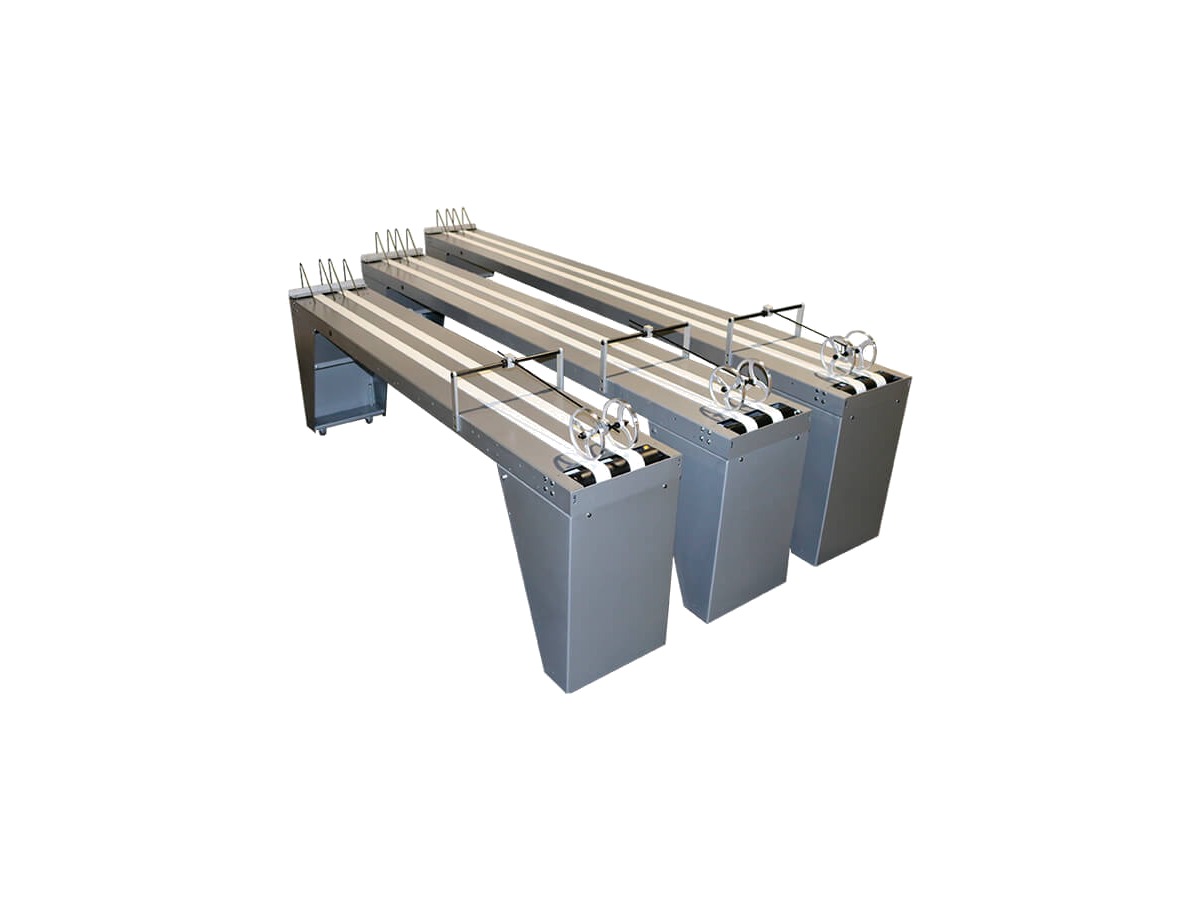
Move products, mailpieces, cartons, packages, and cases between production stages using belt, vacuum, timing-belt, incline, and collection conveyors.

Accumulation and collection equipment helps balance differences in machine speed, create controlled product spacing, and organize completed output.

Explore Material Handling & End-of-Line Automation Solutions

Explore Product Conveyor & Accumulation Systems

Conveyor families are grouped by manufacturer so transport method, product control, and accumulation behavior can be compared directly.

Conveyor & Accumulation Systems

Flat-belt, vacuum, timing-belt, incline, interface, and collection conveyors for products, mailpieces, cartons, and cases.

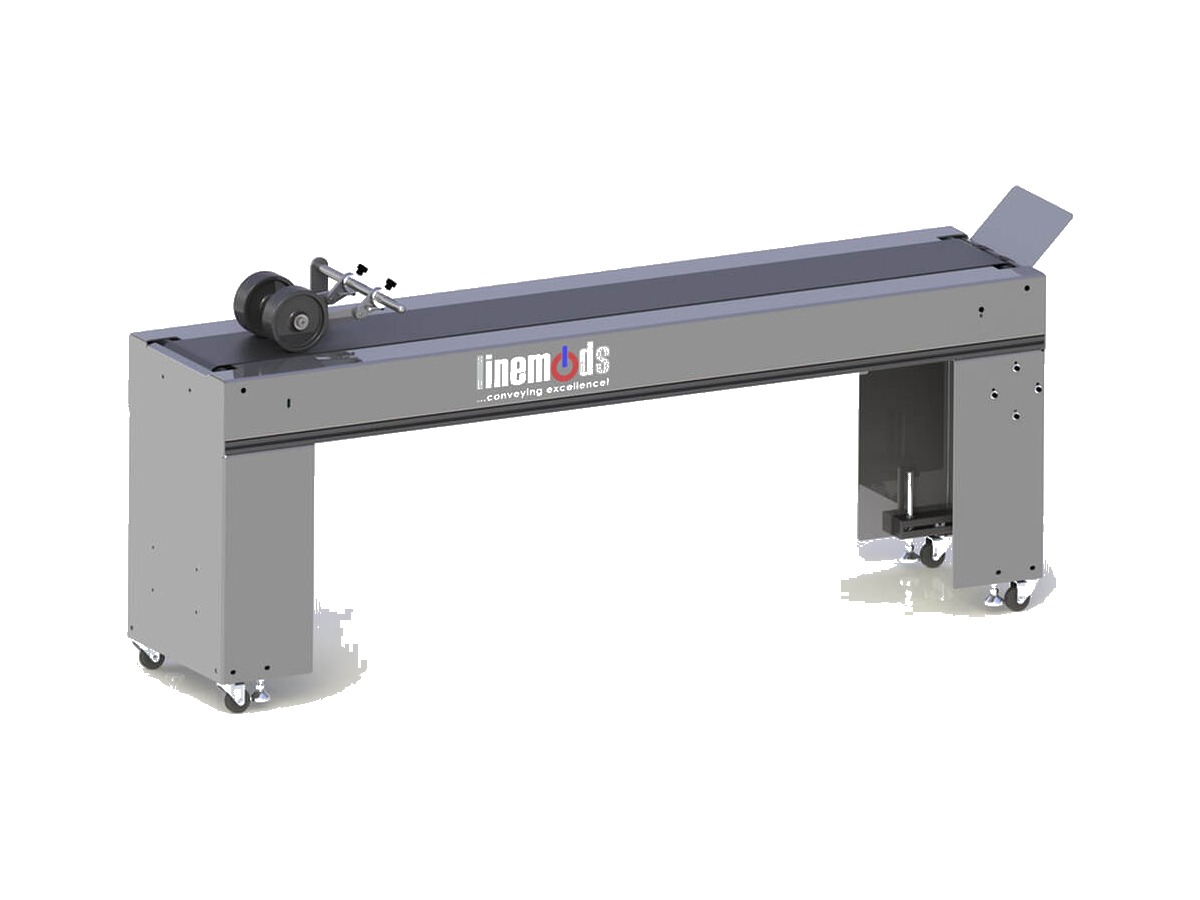
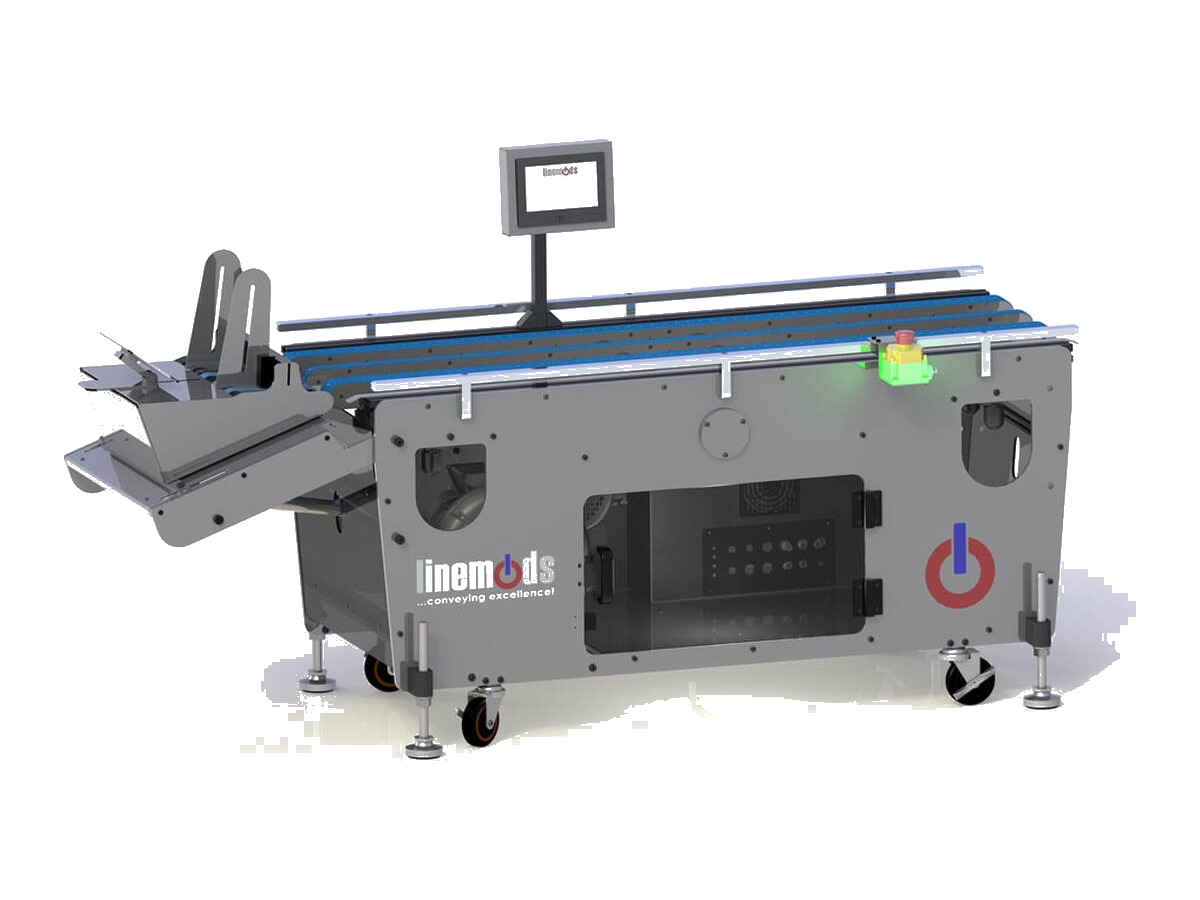
LineMods VMC vacuum transport conveyor

LineMods

VMC Vacuum Transport Family

Vacuum transport and finishing conveyors for controlled product movement through printing, scanning, labeling, placement, drying, and finishing applications.

VMC 205, VMC 206, VMC 2010, VMC 3015

  • Vacuum product control
  • Tool-less production setup
  • Standalone or connected operation
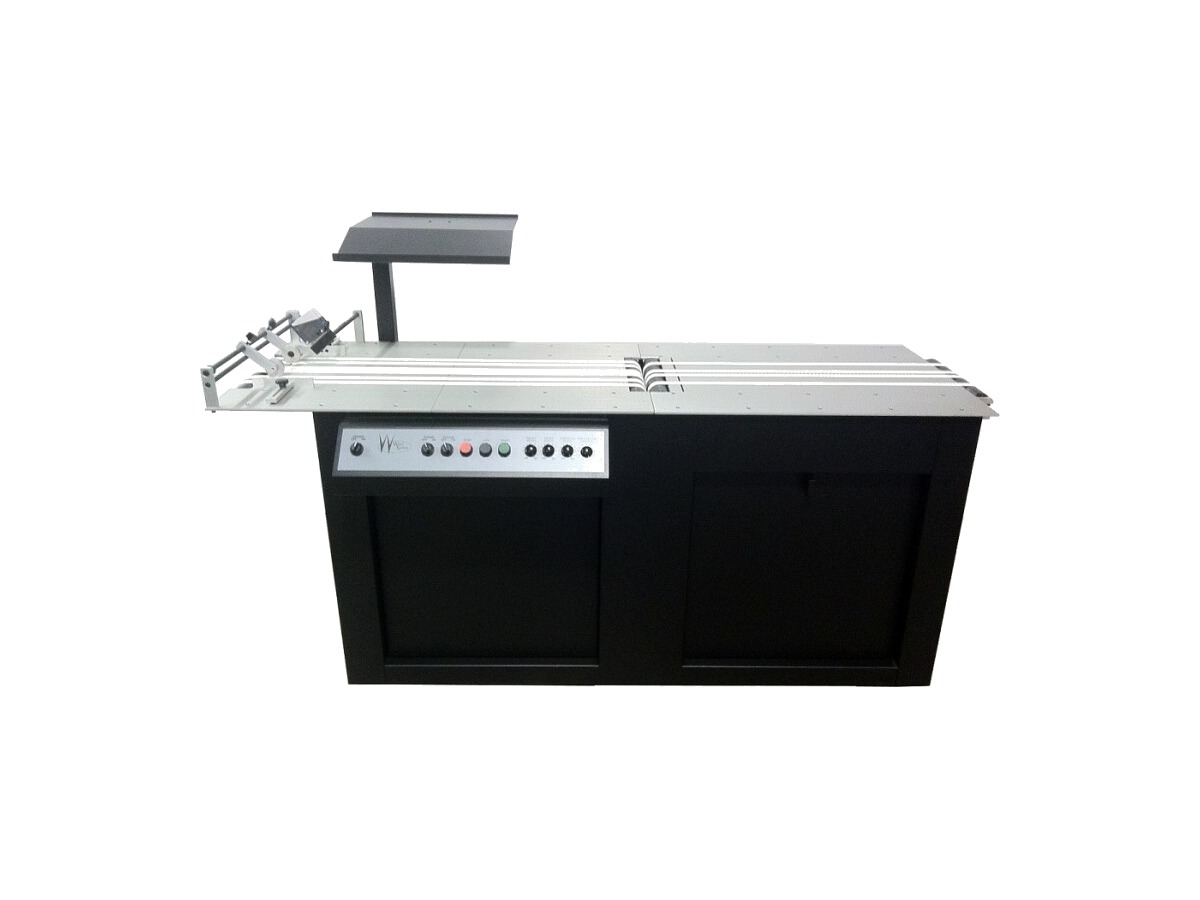
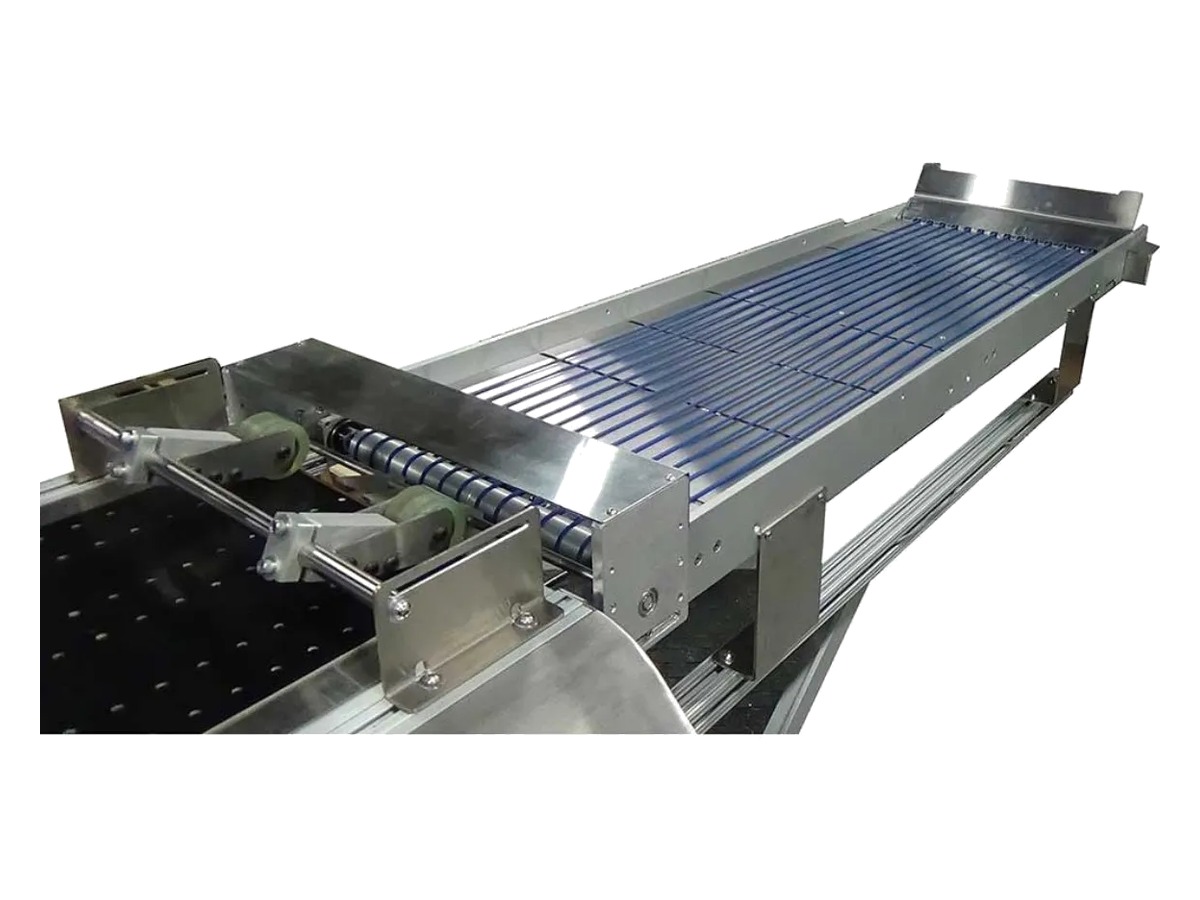
Kirk-Rudy KR314 shingle conveyor

Kirk-Rudy

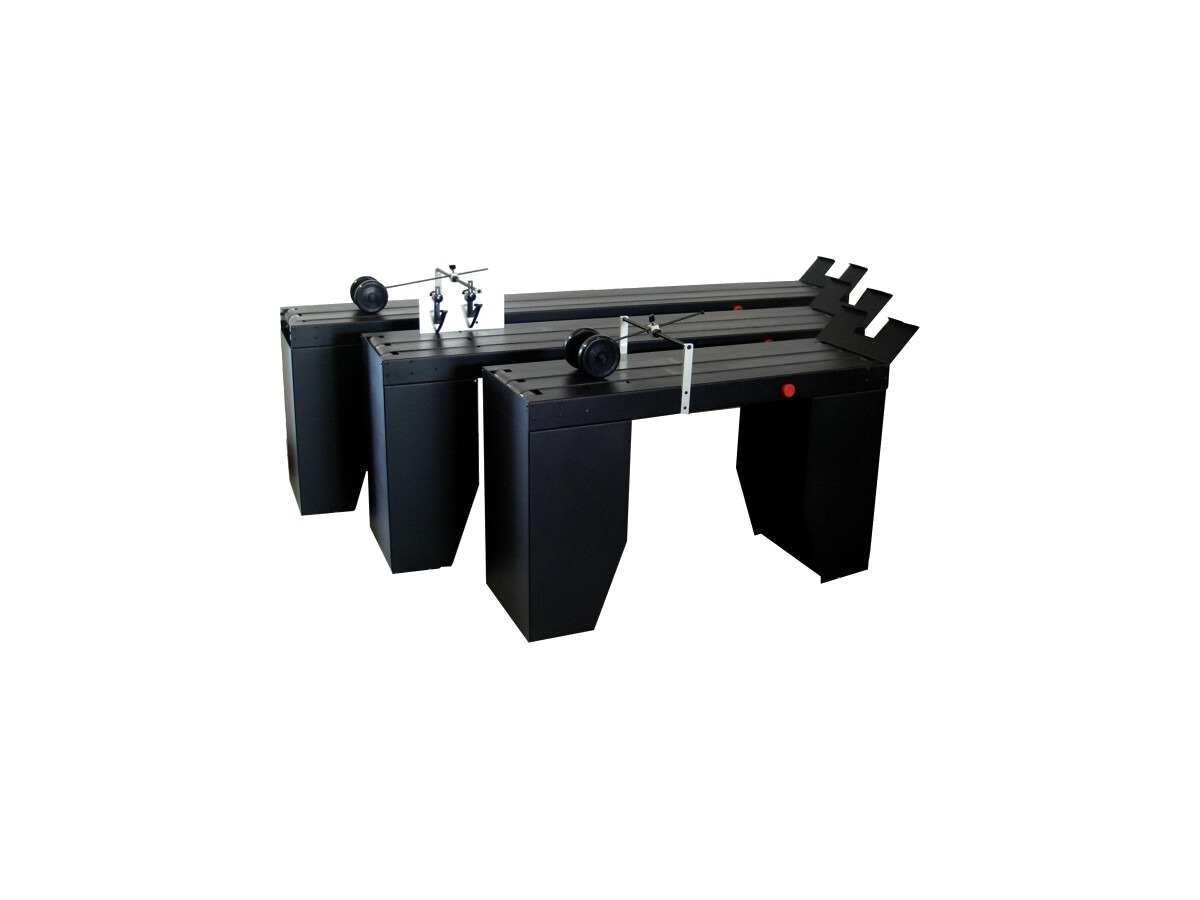
Production Conveyor Family

Production conveyors for product delivery, edge stacking, elevation transitions, and equipment-to-equipment workflow connections.

KR314, KR345, KR411, KR415

  • Product delivery and collection
  • Incline and equipment transitions
  • Mail, print, and finishing integration

What Determines the Right Product Conveyor?

Five areas usually determine the transport method and conveyor configuration.

Product Dimensions and Stability

Document the size, weight, thickness, surface, and stability of the product being carried.

Belt, Vacuum, or Roller Surface

Match the transport surface to how the product must be supported and how firmly it must be held in position.

Production Speed and Product Gap

Review products per minute, required conveyor speed, and the spacing downstream equipment expects.

Accumulation and Collection Requirements

Determine how much buffering is needed between machines and how completed output should be gathered.

Equipment Interfaces and Available Space

Review transfer heights, machine handoffs, operator access, controls, and the floor space available.

Related Equipment Pathways

Transfers, Turns & Sortation

Turn, align, register, divert, and route products between equipment and production paths.

Explore Transfers, Turns & Sortation

Product Handling, Collation & Stacking

Denest, pick, place, collate, count, batch, stack, and collect products before the next step.

Explore Product Handling & Stacking

Print & Mail Equipment

Feed, fold, insert, address, tab, sort, and verify printed mail production.

Explore Print & Mail Equipment

Digital Printing & Finishing Equipment

Print, coat, cut, crease, fold, and finish digital output before downstream handling.

Explore Digital Printing & Finishing Equipment

Integrated Systems

Connect conveyors with printing, coding, labeling, inspection, packaging, and line controls.

Explore Integrated Systems

Related Solution

Material Handling & End-of-Line Automation

Explore how conveying, accumulation, routing, inspection, pallet handling, documentation, and downstream workflow requirements work together across the final stages of production.

Integrated Systems

Connect conveyors and handling equipment with printing, coding, labeling, packaging, inspection, robotics, data, and line controls.

Explore Integrated Systems

Service & Support

Request installation, training, preventive maintenance, troubleshooting, and repair support for eligible material-handling equipment.

Explore Service & Support

Frequently Asked Questions

What types of product conveyors are available?

Available equipment includes flat-belt, vacuum, timing-belt, incline, interface, shingle, and collection conveyors, along with accumulation sections used to buffer product between machines. The appropriate type depends on the product, the surface it can be carried on, and the equipment on either side of the conveyor.

When is a vacuum conveyor appropriate?

A vacuum conveyor holds flatter or lighter products securely against the transport surface, which helps when the product must stay in a fixed position for printing, scanning, labeling, drying, or inspection.

What is conveyor accumulation?

Accumulation is controlled buffering between machines. It allows an upstream process to keep running for a period when the downstream process pauses, changes over, or operates at a different rate.

What information does ATP need to recommend a conveyor?

Helpful information includes product dimensions and weight, production rate, required spacing or accumulation, transfer heights, available floor space, the equipment before and after the conveyor, and photographs or video of the current workflow.
Move Product Between Every Process

Share the product, the production rate, and the equipment on either side of the conveyor, and ATP can help identify an appropriate transport or accumulation approach.

  • Product dimensions and weight
  • Products per minute
  • Required product spacing
  • Accumulation requirements
  • Transfer heights
  • Upstream and downstream equipment
  • Available floor space
  • Photographs, video, or samples