Coding & Marking Equipment

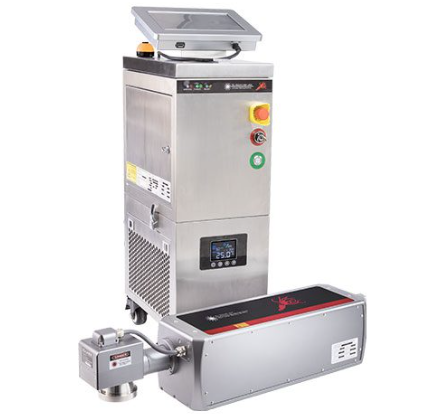
Laser Marking Systems

Create permanent text, dates, serial numbers, barcodes, 2D codes, graphics, and identification marks on products, packaging, films, plastics, metals, and industrial components.

CO2, fiber, and UV laser technologies each interact differently with materials, so the substrate and the required mark usually determine the wavelength before anything else is specified.

Explore Coding & Marking Solutions

Explore Laser Marking Systems

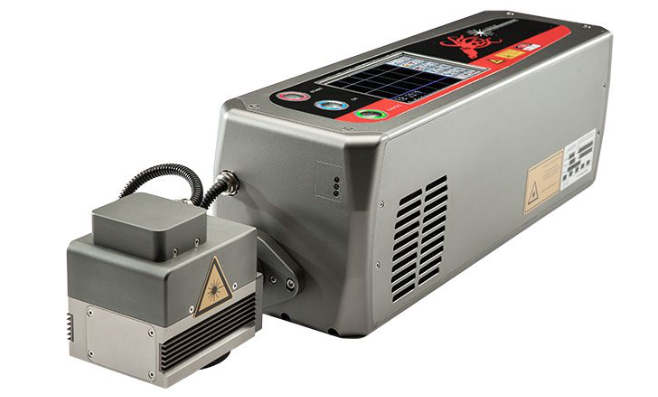
The systems below span CO2, fiber, fiber film, and UV technologies across a range of power levels and application types.

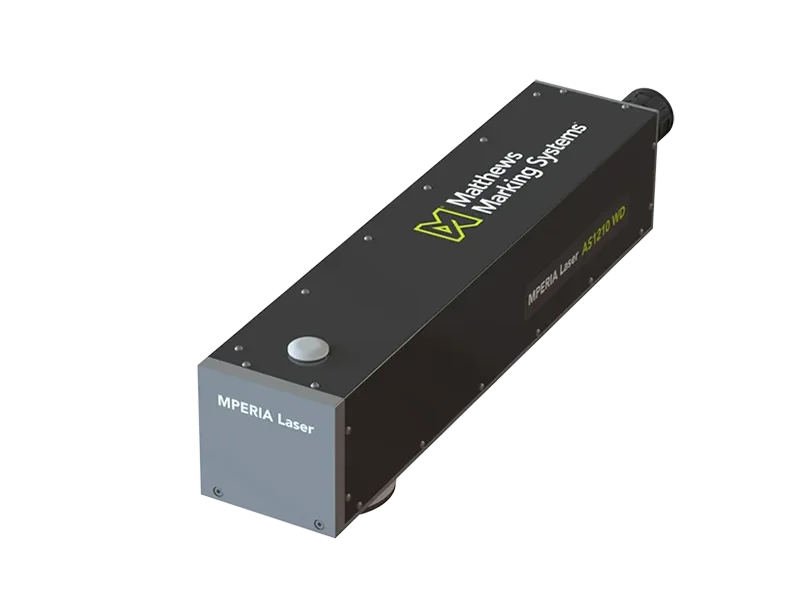
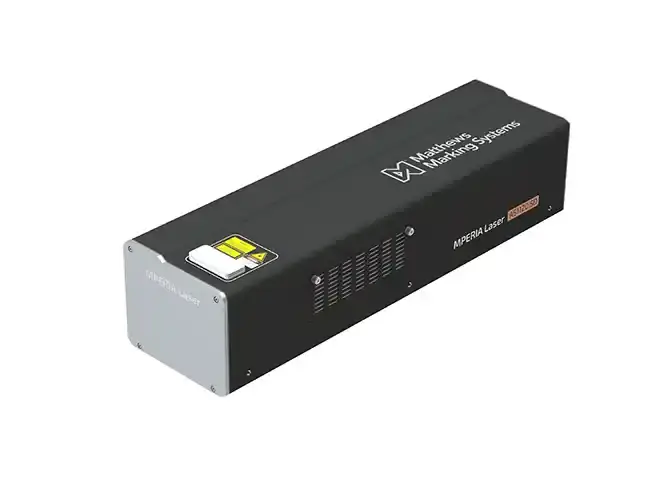
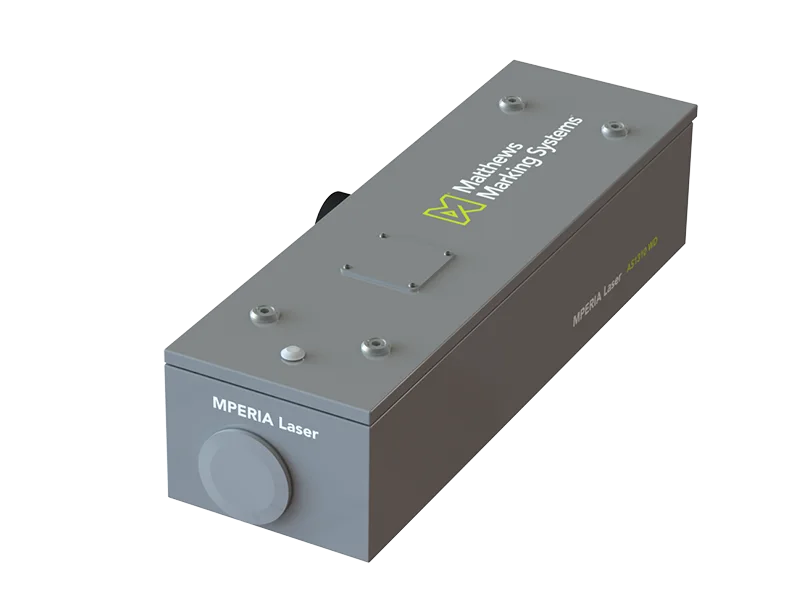
Matthews Marking Systems

Matthews MPERIA laser families cover CO2, UV, and fiber technologies under a common controller approach.

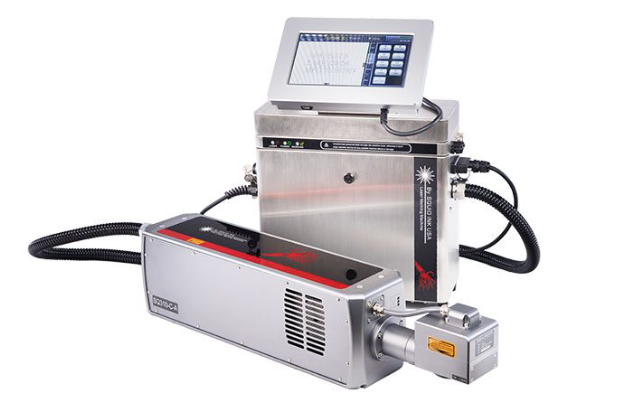
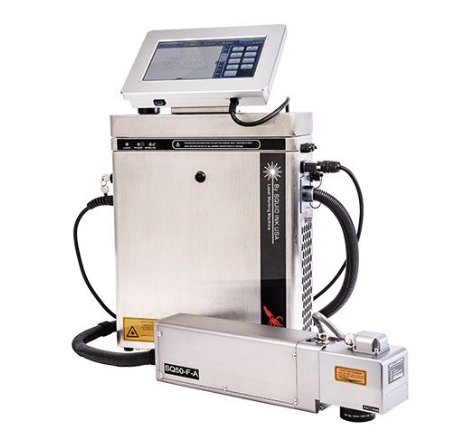
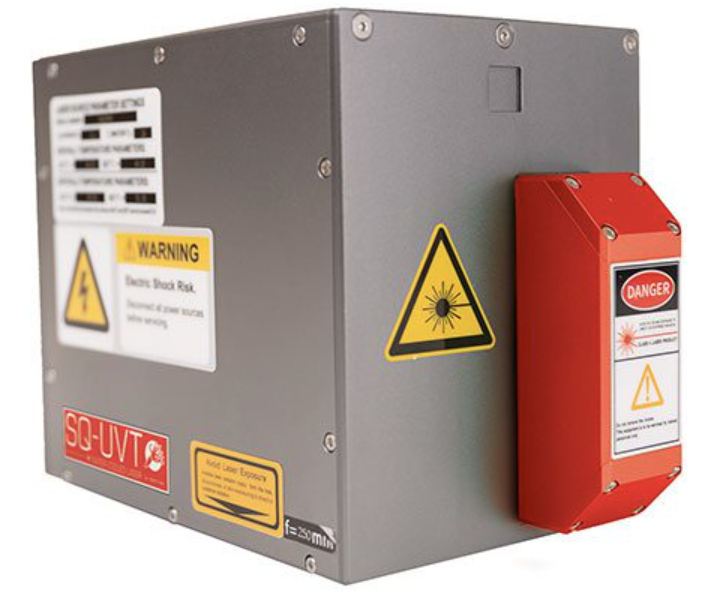
Squid Ink

Squid Ink laser coders range from a compact 10-watt CO2 system through higher-powered CO2, fiber, and UV configurations.

Related accessory: SQ-LFX laser fume extraction supports compatible laser installations. It is an accessory rather than a laser printer. View manufacturer laser reference — Squid Ink laser coders, opens in a new tab

What Determines the Right Laser Marking System?

Laser selection begins with the material and the mark, not with wattage.

Material and Surface

Identify the exact substrate, any coating or varnish, and how the surface reacts to heat. Two products that look similar can respond very differently, so sample marking is a normal part of the evaluation.

Required Mark and Contrast

Define the content, character height, and the level of contrast the code must achieve. Fine detail, small 2D codes, and high-contrast marks on difficult materials often point toward a specific wavelength.

Production Speed

Review line speed, the number of characters per mark, and whether marking happens on the fly or during a brief dwell. The amount of content directly limits how fast the product can pass the marking window.

Focal Distance and Product Movement

Confirm the distance from the marking head to the surface and how consistently the product holds that distance. Variation in position affects focus and therefore mark quality.

Enclosure, Extraction, and Safety

Determine the safety class required, whether a guarded enclosure or interlocks are needed, and how fumes and particulate will be extracted and filtered at the marking point.

Related Equipment Pathways

Continuous Inkjet Printers

Compare non-contact small-character ink coding when a laser mark is not achievable on the material or the contrast is insufficient.

Explore Continuous Inkjet Printers

Thermal Inkjet Printers

Consider cartridge-based systems for high-resolution text, graphics, and 2D codes on porous and coated packaging.

Explore Thermal Inkjet Printers

Flexible Packaging & Specialty Coding

Review UV and fiber-film laser configurations used for films, webs, pouches, and closures.

Explore Flexible Packaging & Specialty Coding

Case, Carton & Large-Character Coding

Explore direct printing on secondary packaging where large, highly visible marks are required.

Explore Case, Carton & Large-Character Coding

Related Solution

Coding & Marking Solutions

Explore how code content, substrates, production speed, product handling, inspection, data requirements, and downstream processes determine the appropriate coding technology.

Integrated Systems

Connect printers, lasers, sensors, conveyors, product handling, cameras, inspection, rejection, production data, and line controls into a coordinated workflow.

Explore Integrated Systems

Service & Support

Request installation, training, preventive maintenance, troubleshooting, and repair support for eligible coding and marking equipment.

Explore Service & Support

Frequently Asked Questions

What is industrial laser marking?

Industrial laser marking uses a focused beam to change the surface of a material, producing a permanent mark by ablating a coating, foaming or carbonizing a plastic, or engraving a metal. Nothing is added to the product, so the resulting code cannot be smudged or wiped away.

What is the difference between CO2, fiber, and UV lasers?

CO2 lasers are commonly used on coated papers, cartons, many plastics, glass, and rubber. Fiber lasers are generally selected for metals and dense plastics. UV lasers operate at a shorter wavelength with less heat, which suits fine detail, sensitive plastics, and flexible films.

Do laser systems require ink or ribbon?

No. Laser marking is consumable-free in the sense that there is no ink, solvent, or ribbon to replenish. Applications often still require fume extraction, protective optics, safety enclosures or interlocks, and periodic lens cleaning depending on the material and environment.

What information does ATP need to evaluate a laser application?

Helpful details include the exact material and any coating, the required mark and contrast, code size and content, production speed, whether the product moves or is stationary during marking, focal distance, available space, and the site's safety and extraction requirements.
Evaluate Your Laser Marking Application

Send the material details and the mark you need, and ATP can help determine whether a CO2, fiber, or UV laser fits the application.

  • What must be printed
  • Product or package material
  • Code dimensions
  • Required barcode or 2D format
  • Production speed
  • Print location
  • Operating environment
  • Existing equipment
  • Inspection requirements
  • Photographs, video, or samples